
Fast fashion is everywhere. It’s affordable, trendy, and constantly changing. But what happens behind the scenes, and more importantly, at the end of a garment’s life?
In this conversation, Dr. Vidhura, board member of Cascale (formerly the Sustainable Apparel Coalition), explains why the fashion industry’s biggest problem isn’t just one issue, it’s the entire lifecycle.
Here is what we have figured out together:
What is the main problem in the fashion industry today?
“I think the fashion industry has quite a lot of problems,” Dr. Vidhura said.
He emphasized that it is not just one issue. The industry has a fairly large environmental footprint and is growing rapidly. If these impacts are not addressed quickly and sustainably, the footprint left by the industry could be too large for the planet to recover from.
Part of the issue, he explained, is the sheer volume of products entering the market every year.
But it is also about the entire life cycle:
- What materials garments are made from (upstream)
- How they are manufactured
- What happens at the end of life (downstream)
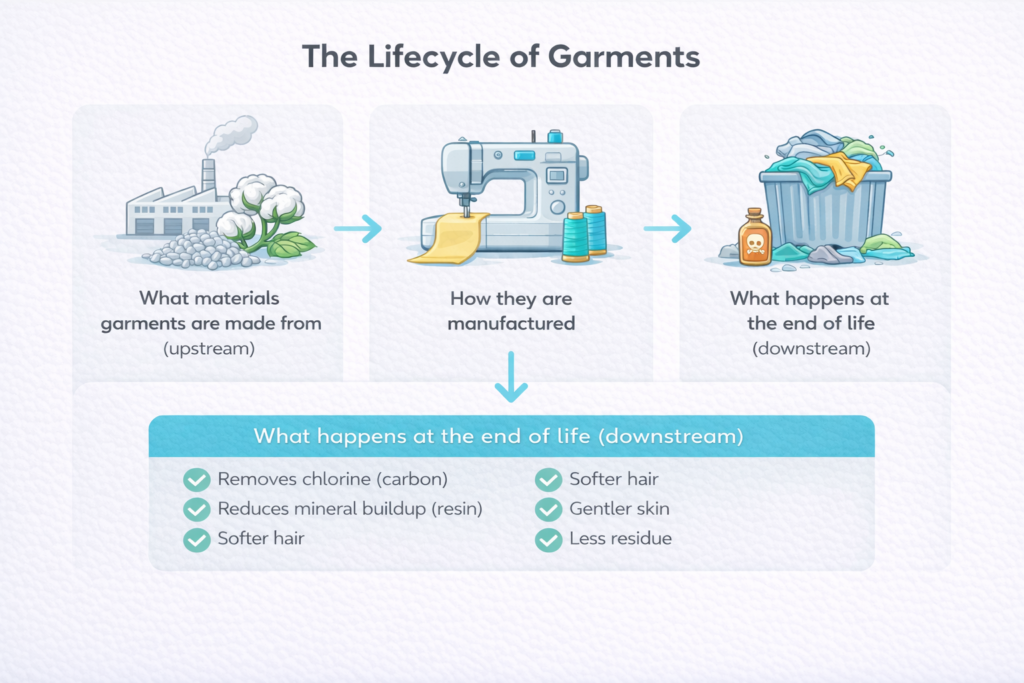
By the end of that life cycle, many garments go to landfills or, as he mentioned, to places like the Atacama Desert or certain regions in Africa, where secondhand markets often function more as dumping grounds than true resale systems.
Is it safe to assume that if clothing is cheap, it is unethical?
Dr. Vidhura was careful not to make a blanket statement. He explained that price alone is not a reliable indicator of ethics, and luxury brands are not necessarily more expensive because they follow higher standards. There can be a disconnect between price and responsible production.
However, he acknowledged that when prices seem unrealistically low, costs are often being absorbed elsewhere. If companies cut corners on fair wages, worker safety, or environmental protections like wastewater treatment, their production costs decrease. This creates an uneven playing field, where responsible manufacturers are disadvantaged for doing the right thing.
Are luxury brands automatically more ethical?
“It’s not a given,” he emphasized.
The better question, he explained, is not about price but about standards:
- What standards does the brand follow?
- How far upstream do they go?
He introduced the tier system:
- Tier 1: Garment manufacturing
- Tier 2: Fabric production
- Tier 3: Yarn
- Tier 4: Fiber
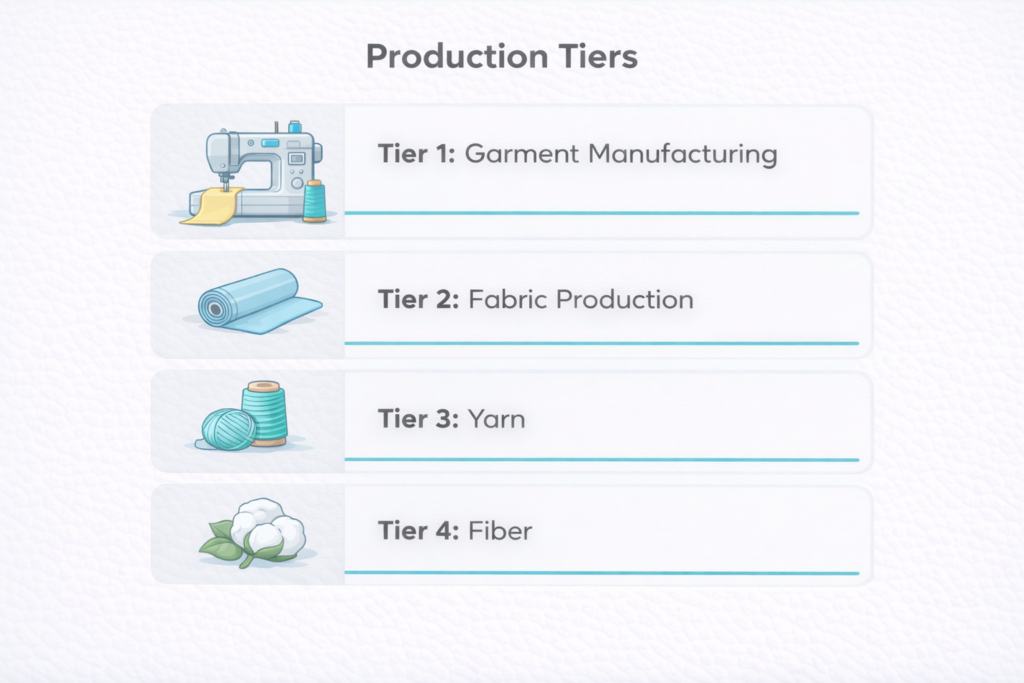
Sometimes standards apply only at Tier 1. Ideally, he noted, standards should apply across the full value chain.
Are labor abuses still happening?
Dr. Vidhura explained that there are two parts of the industry:
- A regulated ecosystem operating under social, environmental, and legal frameworks.
- An informal or unregulated sector where those frameworks may not exist.
Approximately 45,000 factories globally follow recognized standards. However, he estimated that the total number of factories worldwide could be more than ten times that.
Many organized, larger brands tend to operate within the regulated ecosystem. Problems are more likely in the informal sector or among brands that do not adopt recognized standards.
Why don’t we see a certification label like in food or pharmaceuticals?
Dr. Vidhura explained that the difference is that in fashion, the standards relate to how the product is made, not to a direct product attribute.
For example, “organic cotton” is a fiber attribute and can be labeled.
But social and environmental standards relate to processes across the supply chain, which makes product-level labeling more complex.
He noted that while there are globally recognized and externally audited standards, the most practical way for consumers to evaluate brands is by reviewing sustainability reports.
He also mentioned that brands that are members of Cascale must follow its framework.
Has regulation improved accountability?
Dr. Vidhura explained that value chain responsibility and due diligence laws have been developing, particularly in Europe.
However, he also highlighted recent geopolitical shifts that diluted some planned regulations in Europe and the U.S.
Additionally, he noted that USAID had played a significant role in supporting social standards in manufacturing countries. With funding collapses, some of those systems have weakened.
He described this as a regression at a time when stronger accountability was needed.
How does fashion impact water?
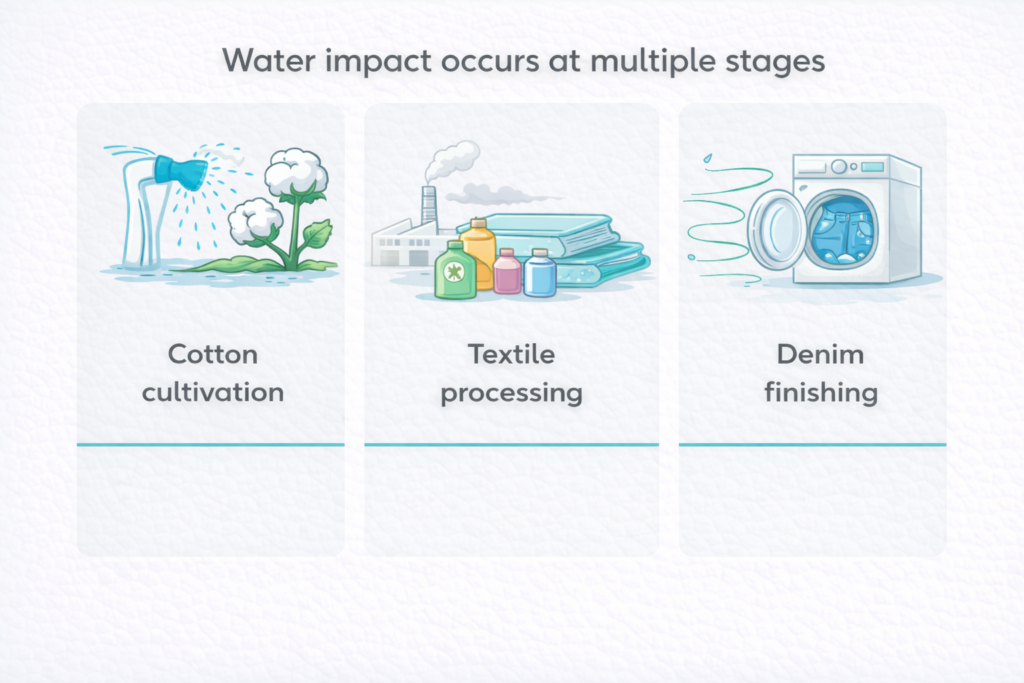
Water impact occurs at multiple stages.
- Cotton cultivation uses water, fertilizers, and pesticides.
- Textile processing, especially dyeing and finishing, is both chemical- and water-intensive.
- Denim finishing involves multiple wash cycles.
He gave a technical example:
Historically, denim washing used a liquor ratio of 1:20 (1 kg garment to 20 kg water). With advanced machines, this has been reduced to ratios closer to 1:3.
He also explained circular water reuse systems, where up to 80–92% of water can be reused in advanced facilities.
However, these technologies are not yet universal.
What happens if wastewater is not treated properly?
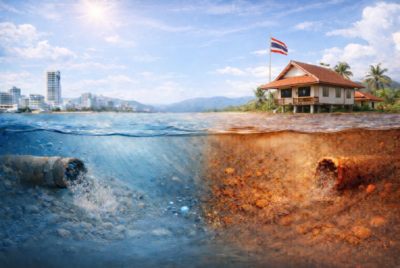
Untreated effluent enters the water cycle, rivers, lakes, oceans.
Boiling water removes bacteria, he noted, but does not remove chemical residues.
He referenced Greenpeace’s “Detox Fashion” campaign (around 2009), which documented severe pollution cases in several countries.
While conditions have improved in regulated sectors, he stated that there is still a long way to go, particularly in adopting advanced filtration technologies.
What about chemicals like PFAS?
Dr. Vidhura explained that there is no process that completely eliminates chemical residues.
Therefore, the most effective solution is preventing toxic chemicals from entering factories in the first place.
He described:
MRSL prevents factories from bringing certain hazardous chemicals into production at all.
Regarding PFAS (used in waterproofing and stain resistance), he noted that concerns about these chemicals have existed for 10–15 years, yet they are still not fully banned industry-wide.
He also discussed other chemicals, such as phthalates (used in certain printed garments), and potassium permanganate (historically used in denim bleaching).
Alternative technologies exist, but adoption varies.
What can consumers do?
Dr. Vidhura emphasized three drivers of change:
- Consumer pressure
- Industry leadership
- Regulation
For individuals, he suggested:
- Buy less
- Wear garments longer
- Choose better quality
He referenced research showing that average garment use can be surprisingly low (less than 10 wears in one UK study).
Increasing usage significantly improves environmental performance.
Final Thoughts
Fast fashion’s low prices often hide environmental damage, chemical exposure, and social inequality somewhere along the supply chain. As Dr. Vidhura highlighted throughout our conversation, the issue is not one single failure, it is a system that must be addressed across its entire life cycle.Not all cheap clothing is unethical. Not all luxury clothing is ethical.But if a price seems impossibly low, it is worth asking: Who is paying the difference? And is it the planet?
Watch my full video here
Do’s and Don’ts of Ethical Fashion
Do:Buy less, choose better. Prioritize quality over quantity.
Don’t: Assume luxury = ethical.
Do: Wear your clothes longer. Aim for at least 30 wears (minimum 20 washes as a durability baseline).
Don’t: Ignore end-of-life impact, consider resale, donation, repair.
Do: recycle your clothes and buy second hand garments
Don’t: Fall for greenwashing buzzwords without proof.
Do: Check if brands are signatories to ZDHC or members of initiatives like Cascale.
Don’t: Fall for greenwashing buzzwords without proof.
Summary
- Price alone is not a reliable indicator of ethics when it comes to fast fashion
- Expensive or luxury brands are not automatically more sustainable.
- The key question is what standards a brand follows to make a garment.
- It is equally important to examine how far those standards extend in the supply chain.
- The fashion industry operates through a tier system, from finished garment to raw fiber.
- Many brands apply standards only at the final manufacturing stage.
- True accountability requires standards to cover the entire value chain, from fiber to finished product.
FAQ
Is all fast fashion unethical?
Not automatically. Some large, established brands follow environmental and social standards. However, extremely low prices often signal corner-cutting somewhere in the supply chain.A good indicator would be to check if brands are signatories to ZDHC or members of initiatives like Cascale.
Are luxury brands safer or more ethical?
Not necessarily. Price is not a reliable ethical indicator. The real metric is which standards a brand follows and how far those standards extend across the supply chain.
What are PFAS in clothing?
PFAS are “forever chemicals” used for waterproofing and stain resistance. They are persistent, bioaccumulative, and linked to health risks. They are not fully banned industry-wide.
What is ZDHC?
ZDHC stands for Zero Discharge of Hazardous Chemicals. It is an industry initiative aimed at eliminating harmful chemicals from fashion production.
What is the difference between MRSL and PRSL?
- MRSL (Manufacturing Restricted Substance List): Prevents factories from using hazardous chemicals in production.
- PRSL (Product Restricted Substance List): Limits harmful chemicals in the final product.
MRSL is more preventative, if toxic chemicals never enter the factory, they can’t pollute water.
How many times should I wear a garment?
Aim for 30+ wears is a strong environmental benchmark. Durability matters. Consider recycling or donating your clothes to a thrift shop.
What happens to donated clothes?
A small percentage is resold. A large portion is exported and often becomes waste in landfills in developing countries.
Which indicators say the garment is using toxic chemicals?
- Waterproof
- Stainproof
- Color shading on denim jeans
- Printed garments
A good indicator would be to check if brands are signatories to ZDHC or members of initiatives like Cascale.