
Safety, Desalination, TDS Levels, all you should know
Everything You Need to Know About Water Quality in Dubai
From the moment you land, you can hear warnings like: “Don’t drink the tap water!” This long-standing perception has persisted for years. So, what’s really in Dubai’s tap water, and is it safe to drink? Let’s explore.
1. Dubai’s Main Water Sources: Groundwater and Desalination
Groundwater in Dubai
First, we need to understand the water sources so we can fully grasp its safetyness. The first one is Groundwater. This is water found underground in naturally made “tanks” which are formed when rain or precipitation seeps into soil․ This water is vital for agriculture, human consumption, and daily use.
However, Dubai’s unique climate and geography present challenges for this type of water source:
- Low rainfall: The region receives minimal rain, resulting in slow aquifer recharge.
- High evaporation: Even if it rains, it often evaporates before it reaches the ground.
- Saltwater intrusion: Proximity to the sea causes seawater to mix with groundwater, making it too salty for drinking or farming.
Because of these factors, fresh groundwater is scarce, and experts predict that “Day Zero” for underground water could arrive in the next 15–20 years.
2. Desalination: How Dubai Turns Seawater into Drinking Water
The second and major Dubai’s tap water comes from desalination plants Dubai, a process that removes salt and impurities from seawater.
How Desalination Works
- Seawater intake: Water from the sea is pumped into a system with reverse osmosis.
- Reverse osmosis filtration: The membranes inside the RO allow only pure water to pass, blocking salts and other contaminants.
- Water separation: As a result, we get 2 types of water – freshwater for consumption and brine the rest of the contaminated and concentrated salty water that is not suitable for consumption. .
Handling Brine
- Some plants release brine back into the sea.
- Others evaporate it in ponds to extract minerals like magnesium.
- Recycling brine reduces environmental impact and supports sustainability.
Small, portable desalination plants demonstrate how this technology can be scaled globally, turning seawater into drinkable water anywhere in the world. But it just sounds too good to be true, so of course there is a big downside to it which will be covered below.
3. Dubai Tap Water Quality: Key Facts
So I personally tested Dubai tap water using a digital TDS, PH meter, DIY test strips to provide a general view of tap water in Dubai (results may vary by location):
- pH level: 8.4 ( alkaline)
- TDS (Total Dissolved Solids): 322 ppm (well below the WHO guideline of 500 ppm)
- Hardness: 71 ppm (soft to moderately soft)
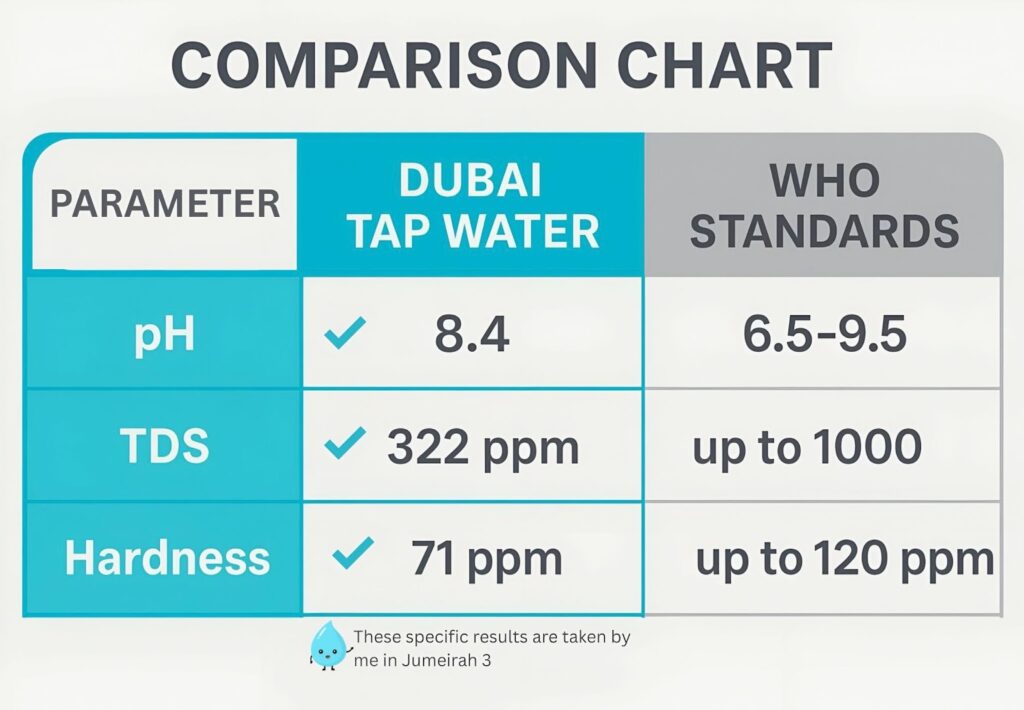
In simple words, because Dubai’s water comes from desalination, the risk of dangerous contaminants like heavy metals is low at the source.
While that’s a good indicator, testing shows that the water has low mineral content. Logically, you’d expect it to have almost no minerals, right? If the RO system only allows pure water to pass, then why do we still see some TDS and hardness?
Here’s the twist. When water is too pure, it becomes corrosive and can pick up contaminants from the pipes as it travels to your apartment. To prevent this, local authorities like DEWA water quality add a small amount of minerals back into the water.
The main contributor to TDS in Dubai’s water is sodium, which comes from desalinated seawater. And finally, Chlorine is added to prevent bacterial growth, especially in the hot climate.
Tip: If the taste of tap water is slightly salty, it’s often due to sodium from desalination — using a filter can improve taste.
4. Is Dubai Tap Water “Pure”?
No tap water is 100% pure anywhere in the world. Desalinated water has a more pipeline corrosion effect than natural water. So while the “clean water” travels through pipes to get your place, it might collect some metals from piping or some sand and dust which can sometimes cause:
- Brownish color due to iron from corroding pipes
- Trace metals from metal plumbing systems
- Highly sedimented water
- Chlorinated water due to high temperatures
5. Should You Drink Tap Water in Dubai?
So what can I conclude from my water investigation here?
Dubai tap water is treated, regulated, and safe when it is coming out from the local water treatment plants. But the pipes, storage tanks and other factors may give the water an unpleasant surprise when it arrives at your tap. While I understand how people would prefer to rely on bottled water, it is important to note that it isn’t the only reliable solution for it. For those who want extra reassurance, installing a home water filter can remove:
- Residual salts
- Chlorine
- Metals and sediments
- Bacteria & viruses
- Any unwanted tastes
- And more
Filtered water also reduces plastic waste and ensures consistent taste and quality.
Tip: Regularly maintain your home water filter to maintain its effectiveness and avoid bacterial growth.
Understanding Water Helps You Make Informed Choices
Knowing how Dubai water is sourced, processed, and delivered allows residents and visitors to make informed decisions about their drinking water. From desalination to filtration and safety standards, there’s more to water than meets the eye and exploring these topics can help everyone drink smarter, live healthier, and reduce environmental impact.
Do’s and Don’ts
Do: Install a home filter to remove residual salts, chlorine, or metals.
Don’t: Automatically assume tap water is unsafe or avoid it without reason.
Do: Learn about local DEWA or UAE gov water quality to make informed choices.
Don’t: Ignore changes in water color or taste—pipe corrosion can happen.
Final Thoughts
Dubai tap water is safe to drink if taken from the source. But the trajectory and water storage tanks it makes to get to your tap may encounter some surprises. Using filters can improve taste, reduce contaminants, and support sustainable water use, all while giving peace of mind.
Summary
- Source: 90% desalination
- pH: 8.4
- TDS: 322 ppm
- Hardness: 71 ppm
- Is it safe? Yes
I’ve included the full YouTube video, with my water tests and interviews, so you can follow the full process and insights.
How Bad is the Tap Water in Dubai?
FAQ
1. Is it safe to drink tap water in Dubai?
You can drink the tap water in Dubai. It’s treated, regulated, and safe at the source. However, the quality can change depending on building pipes and residential storage tanks, which is why many residents prefer using a home filter for taste and added protection or opt for bottled water for drinking.
2. Why does Dubai rely on desalinated water?
Because natural freshwater sources are extremely limited. It’s predicted that by 2030, they will reach Day Zero for ground water sources. This is why they turn to desalination, which allows Dubai to convert seawater into drinkable water using reverse osmosis, making it the city’s primary water supply.
3. What is the TDS level of Dubai tap water?
TDS levels in Dubai typically range between 200–350 ppm, well within the WHO guideline of 500 ppm. Most of the dissolved solids come from sodium or other minerals added after desalination to stabilize the water.
4. Why does Dubai tap water taste slightly salty?
A mild salty taste might be caused by sodium concentrations that can be found in the water. Although, it is within the safety standards, so no worries 🙂
5. Is bottled water better than tap water in Dubai?
Not always. Tap water in Dubai is treated under strict safety and quality standards, often more regulated than bottled water. Yet many homes still rely on bottled water. The best option is using a proper water filter: it removes unwanted tastes, sediment, and contaminants, and gives you cleaner and fresher drinking water straight from the tap. It’s also more affordable long-term and dramatically reduces plastic waste.
6. Do I need a water filter in Dubai?
Yes, it’s recommended to install a water filter at the entry point of your house or apartment. Even though tap water is treated to meet safety standards, there are several factors that can affect water quality before it reaches your tap such as plumbing, storage tanks, or old pipes. It can improve taste and reduce residual chlorine, sediment, and minerals that may be picked up along the way. Filtration also offers extra peace of mind for families or anyone with sensitive taste or skin.
7. Why does Dubai tap water sometimes look cloudy or colored?
Cloudiness or discoloration usually comes from building plumbing issues or disturbances in the municipal (DEWA) water pipes. Iron, sediment, or old pipes can change appearance. If the issue is persistent, it’s best to flush the tap or contact building maintenance.
8. Is hotel tap water in Dubai safe to drink for tourists?
Most tourists and locals rely on bottled or filtered options. It’s best to ask your hotel if they have a centralized filtration system.