
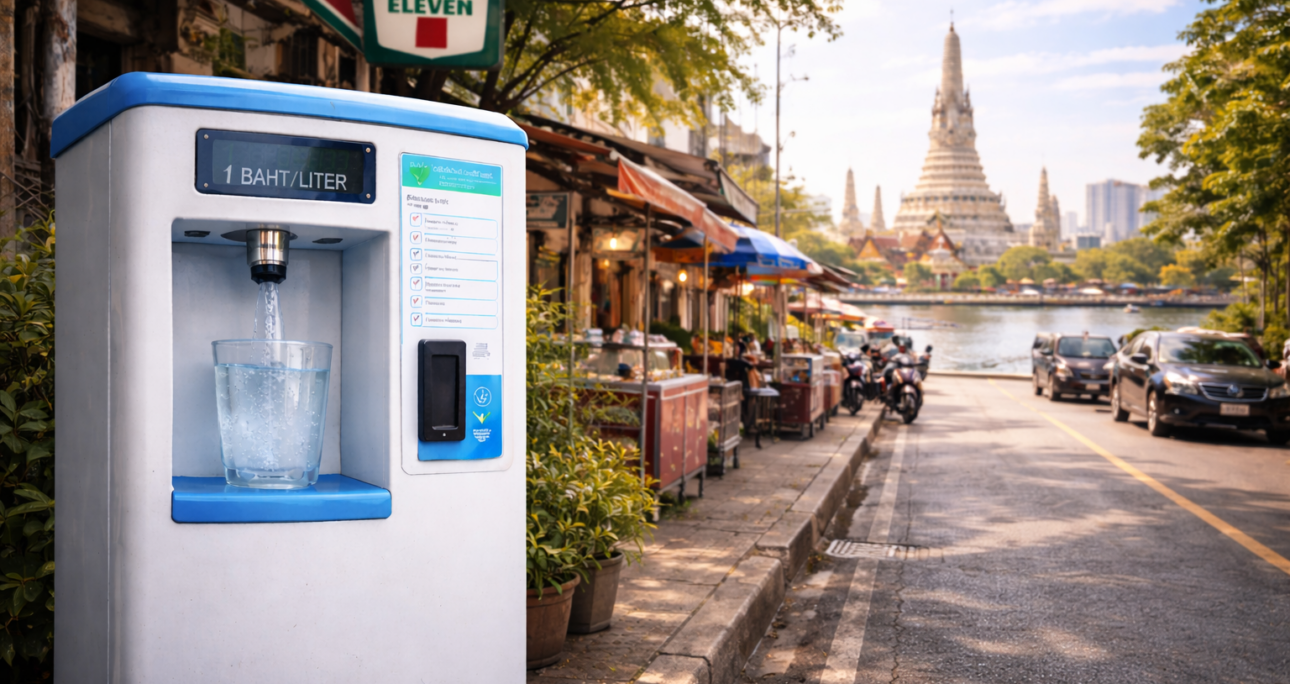
Also known as coin operating water machines.
If you’ve visited Thailand, you’ve probably seen those water machines standing outside busy hubs like 7-Elevens or on Thai street corners. These are essential for daily life, as the tap water is known to be highly contaminated. People show up with big plastic bottles, fill them up, and take them back home for consumption.
After seeing how widely these machines are used, and how often they’re labeled as cheap “drinking water”, I started asking a simple question: Should they actually be trusted?
How to Evaluate the Safety of Thailand’s Drinking Water Dispensers
Think about the last time you bought a car. You didn’t just look at the price tag and the color. You checked the brand’s reputation, the engine model, the safety ratings, and how often it had been serviced.
Your drinking water deserves that same level of attention. You are putting this into your body every single day, yet most people trust these machines blindly.
Water filtration units differ from each other in technology, maintenance needs, intensity, and function. Depending on the water quality, the appropriate filter must be chosen. After my investigation, I found out that the water in Thailand is not safe for consumption, so high levels of filtration are required.
Reverse osmosis units are the most effective at removing almost all contaminants from water. Some achieve up to 99% removal of impurities. For that reason, I recommend always opting for an RO unit. Look for the “Reverse Osmosis” label on top of the machine to ensure it’s the correct type of filtration system.
Why Water Vending Machine Maintenance History is Important
Now, let’s assume you’ve chosen the correct filter, there are still a few things to take into consideration. In the water industry, the “brand” isn’t a logo; it’s the service history. Thailand has several companies operating these machines; some are meticulous about hygiene, while others are neglected for years. If the filters aren’t changed, the water coming out might be even dirtier than tap water, as bacteria growth will begin to accumulate. It would be ideal if maintenance records were somehow publicly reported, but very often it’s based on hearsay.
This is where testing the water becomes the best way to verify quality.
Tip: When choosing a machine, look for a recent maintenance sticker. If the last checkmark was over a year ago, keep walking.
Reverse Osmosis vs. UV Sterilization: Choosing the Best Water Filtration Model
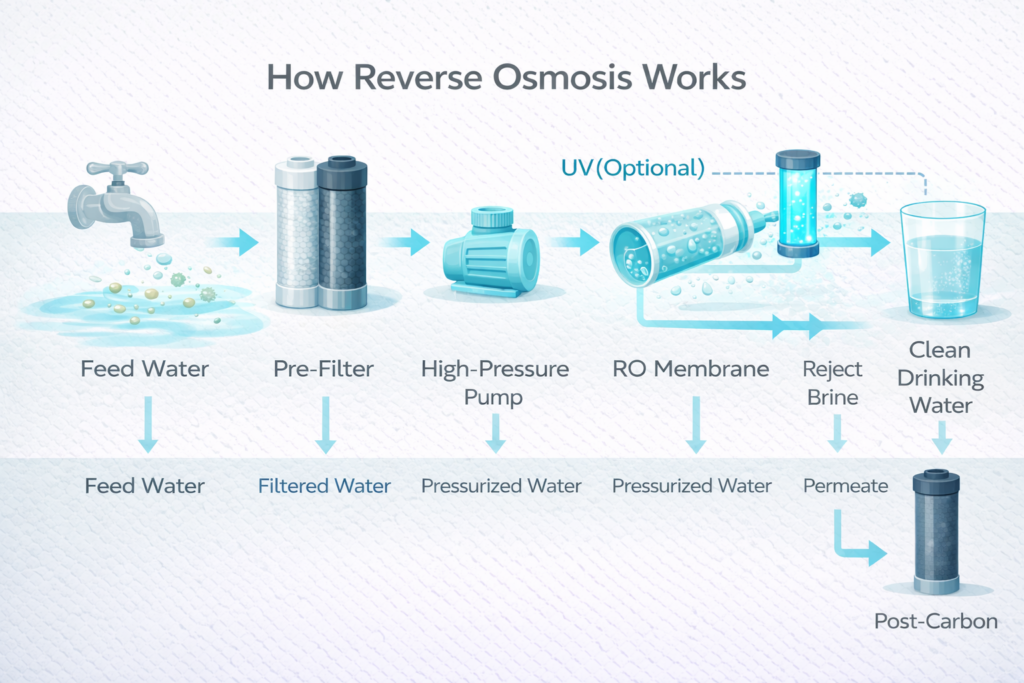
As demonstrated in the visual, the water passes through multiple stages until it’s fully cleaned. Once filtered, it sits in a plastic water tank, waiting for someone to use the machine. It may sit there for hours, days, or even longer if it’s not in an active hub. However, even if it is located in a busy area, that does not mean it is therefore safe. As a matter of fact, I tested one right next to a 7-Eleven, and it turned out that maintenance wasn’t carried out at all.
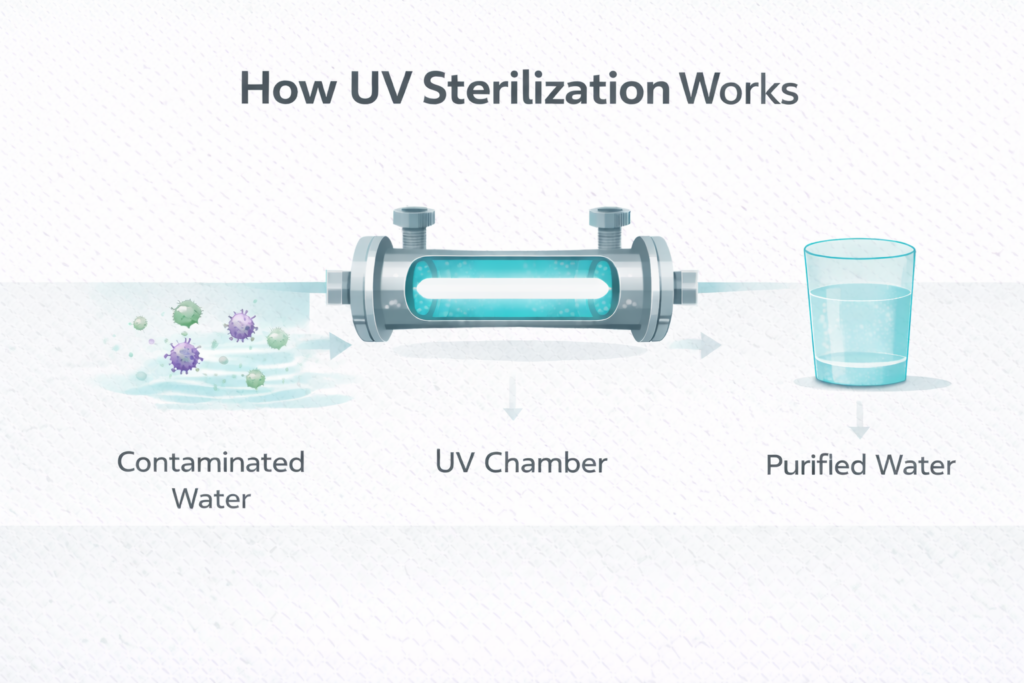
Additionally, as RO water is then stored in an internal tank, you also need UV Sterilization. Thailand is hot, and stagnant water loves to grow bacteria. A UV light acts as a final kill-switch right before the water hits your bottle. This is optional but it is highly recommended to have.
1-Baht Water: Weighing the Pros and the Health Risks
The Pros
- Affordability: At 1 Baht per liter, it is extremely cheap and affordable.
- Eco-Friendly: You’re buying less plastic and refilling the same bottles. (you’re still consuming a lot of plastic but it’s more sustainable for the environment than continuously purchasing bottles.)
- Wide Availability: These machines are everywhere, on streets, in popular hubs, and in buildings.
The Cons/Risks
- Maintenance Gaps: These filters need regular checkups every 6 months or unexpected things can happen which may directly affect your health.
- Reverse sewage Contamination: I’ve noticed many drain pipes go directly into sewage systems. Bacteria or animals from the sewer can actually crawl back inside the system.
- UV Protection Failure: In hot months, UV lights can “pop” or break. Without that light, the storage tank becomes a place where bacteria development can start.
- Transportation: If you don’t have a car or motorbike, lugging these big, heavy bottles home is a serious issue for your back.
How to Test Your Water Before You Drink
You don’t need a lab to spot a failing machine. Assuming the machine is a revrse osmosis system and isn’t adding back any minerals back into the water, ere is the checklist I use:
Visual checks:
- The Nozzle Audit: Look at the dispensing tip. If you see green algae, black spots, or slimy material, walk away. It means the owner hasn’t cleaned the machine.
- The Drain Pipe Check: Look at the back. RO systems produce “waste water.” If the drain pipe is shoved directly into a sewage line without an “air gap,” bacteria can actually crawl back up into the machine.
DIY water tests:
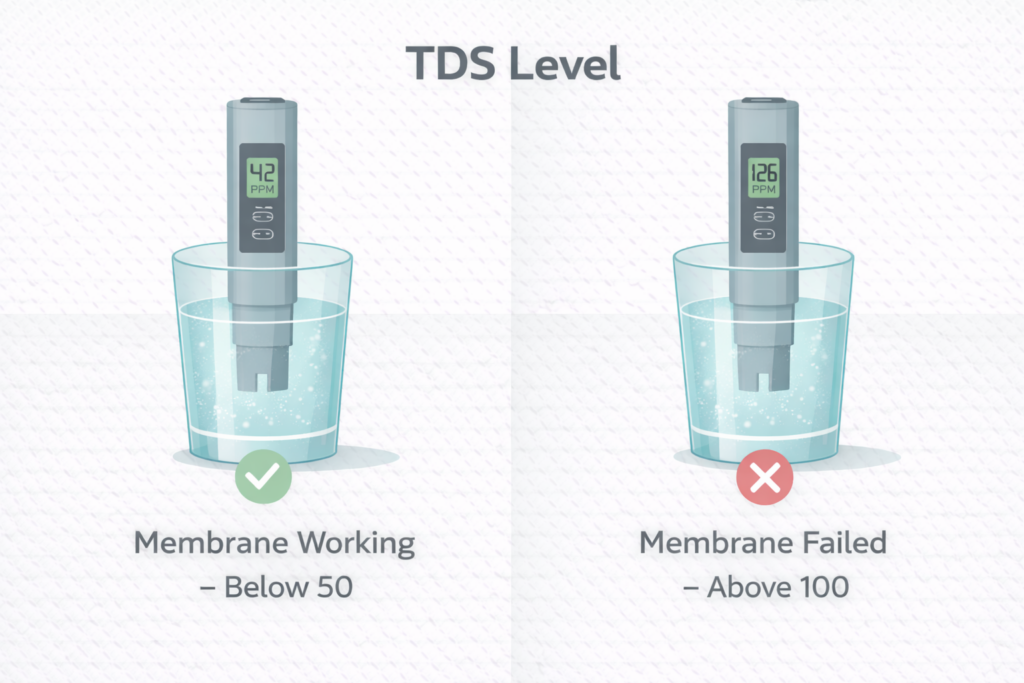
- The TDS Meter: I carry a small TDS (Total Dissolved Solids) meter. For a healthy RO system, you want a reading below 50. If it’s over 100, the RO membrane has failed.
- Bacteria Test: I use a DIY kit like Safe Home. If the water turns blue or green after 24 hours, it’s contaminated.
Watch my full video here.
Final Thoughts
Choosing a public water dispenser in Thailand is about more than just finding the best price; it is about knowing how to verify the technology and maintenance behind the sticker. While the convenience and low cost are undeniable, staying safe requires you to be your own inspector by checking for RO/UV labels and recent service logs. By taking a few seconds to perform a visual check and using tools like a TDS meter, you can enjoy affordable hydration without compromising your health. Don’t let a “Drinking Water” label be the only thing you rely on, be smart, stay observant, and trust the data over the marketing.
Summary:
- Prioritize Reverse Osmosis (RO): It’s the best “model” for removing everything from heavy metals to pathogens.
- UV Sterilization after RO: It’s an extra layer of protection for water stored in internal tanks.
- Check the Stickers: Look for a date or checkmark to ensure the machine was serviced in the last 6 months.
- Inspect the Nozzle: Walk away if you see any algae, slime, or black spots.
- Verify with a TDS Meter: You are looking for a reading below 50. Anything over 100 is not safe for your body.
- Boil as a Backup: If you don’t have a UV water bottle, boiling the water will kill any remaining bacteria.
Do’s and Don’ts
Do: Check the maintenance sticker for a service date within the last 6 months to ensure the filters are still active.
Don’t: Trust a dispenser that has visible rust, algae, or grime on the nozzle, regardless of how cheap the price is.
Do: Look specifically for the “RO” (Reverse Osmosis) label to ensure the machine is capable of removing heavy metals and chemicals.
Don’t: Assume “Multi-stage filtration” is enough; without an RO membrane, the water may still contain microscopic pathogens and industrial residue.
Do: Use a TDS meter to verify the water quality; you are looking for a reading below 50 PPM for a healthy system.
Don’t: Ignore a “musty” or “plastic” taste in the water.
FAQ: Thailand Water Vending Machine Safety
1. Is it safe to drink water from dispensers in Thailand?
Generally, yes, if the machine is maintained. However, recent studies suggest that up to 90% of machines in Bangkok may lack proper licensing, making your visual inspection of the nozzle and service sticker even more important.
2. How can I tell if a water machine uses Reverse Osmosis?
Look for “RO” on the cabinet. You can verify this with a TDS meter; a functioning RO system should give you a reading below 50 PPM + bacteria test in case bacteria growth has started in the storage tank.
3. Can I get “Bangkok Belly” from water machines?
Yes, it is possible. It can be from the water, food, environment or simply bad hygiene. You can start by doing a visual test of whether the dispensing nozzle is dirty or if there’s black dots or slimy water around then don’t blindly trust it. The best way would be to test the water or see for maintenance check dates.
4. Why does the water in the water dispenser, coin operating machines in thailand sometimes taste like plastic?
This usually happens when the internal storage tank is sitting in the sun, causing the water to go stagnant or the plastic to affect the taste.
5. Is it safe to use water machine water for brushing my teeth in Thailand?
Yes. Using dispenser water is much safer than using direct tap water in many areas where pipes may be old.
6. Do I need to boil the water from a dispenser?
If the machine looks neglected or the UV lamp seems broken, boiling is the best way to ensure all bacteria are killed.
7. How do I actually use the water dispenser machine?
Place your bottle in the chamber, insert your coins (1, 2, 5, or 10 Baht), and press the Green Button to start. Press the Red or Green Button to stop when full.