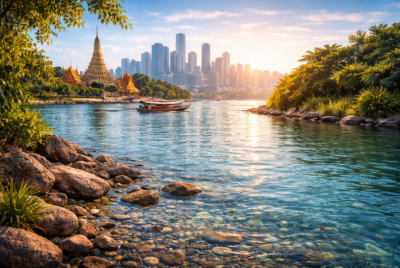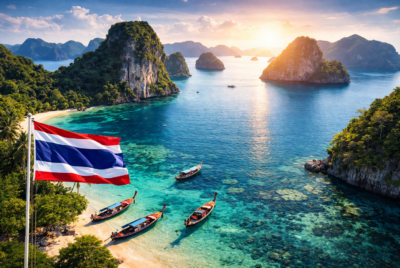

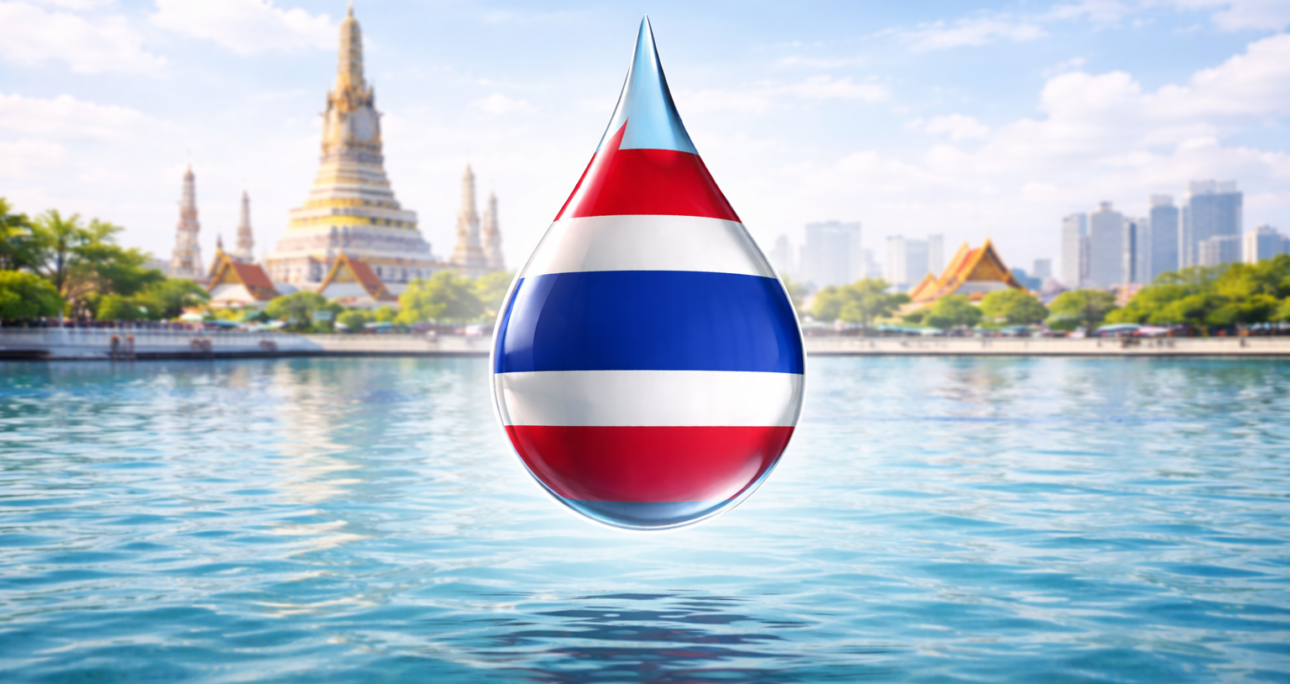
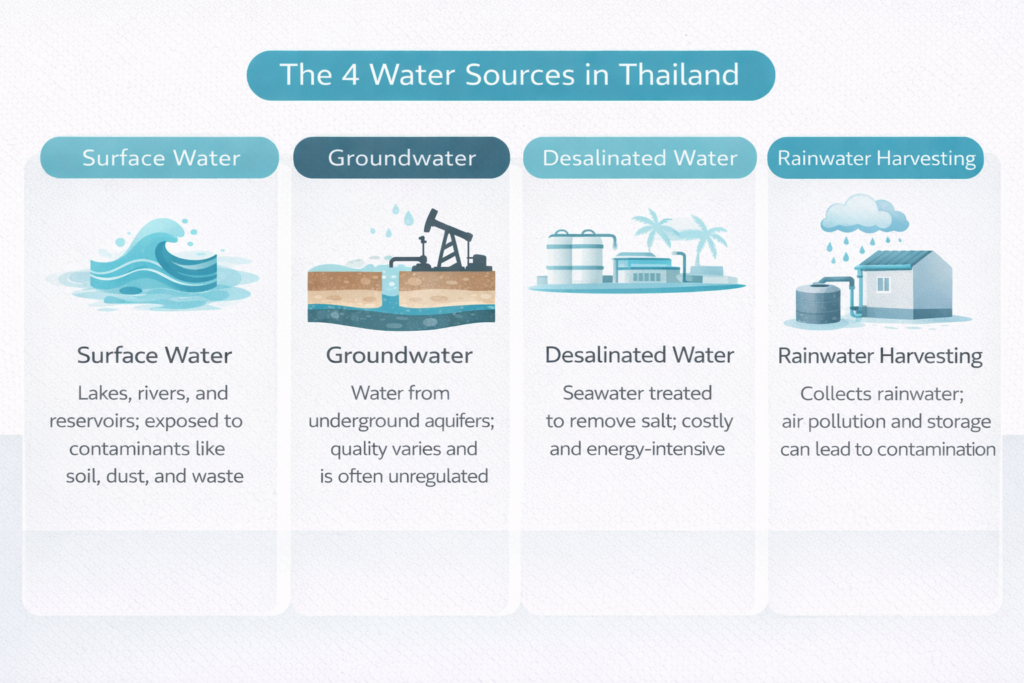
The 4 water Sources that Thailand uses for drinking water.
When I had just arrived in Thailand I looked out from my hotel room, and the very first thing I saw was a water tank.
Seeing it immediately got me thinking. Water tanks, if not maintained correctly, can be an ideal place for bacteria to start developing. Is this tap water? Is it groundwater? What type of water is actually going into this tank? And is this the same water that eventually comes out of my hotel tap? If so, what are the consequences?
I wanted to understand the different water sources used in Thailand and what kind of water actually ends up being delivered to homes, hotels, and buildings. This is the first step towards my investigation about the tap water in Thailand.
Why Water Sources Matter More Than Ever
As we all know, we are currently facing a global water crisis driven by climate change and increased water demand. While most of our planet is covered in water, the majority of it is either seawater, which is salty and contaminated, or locked away in glaciers, making it unavailable for human consumption.
Thailand’s location in South Asia makes it more vulnerable to water scarcity issues, mainly the islands. Managing water here becomes something like a chess game. The challenge is to find water sources that are reliable, suitable for human use, properly filtered, and efficiently delivered to our taps.
Water Source #1: Surface Water
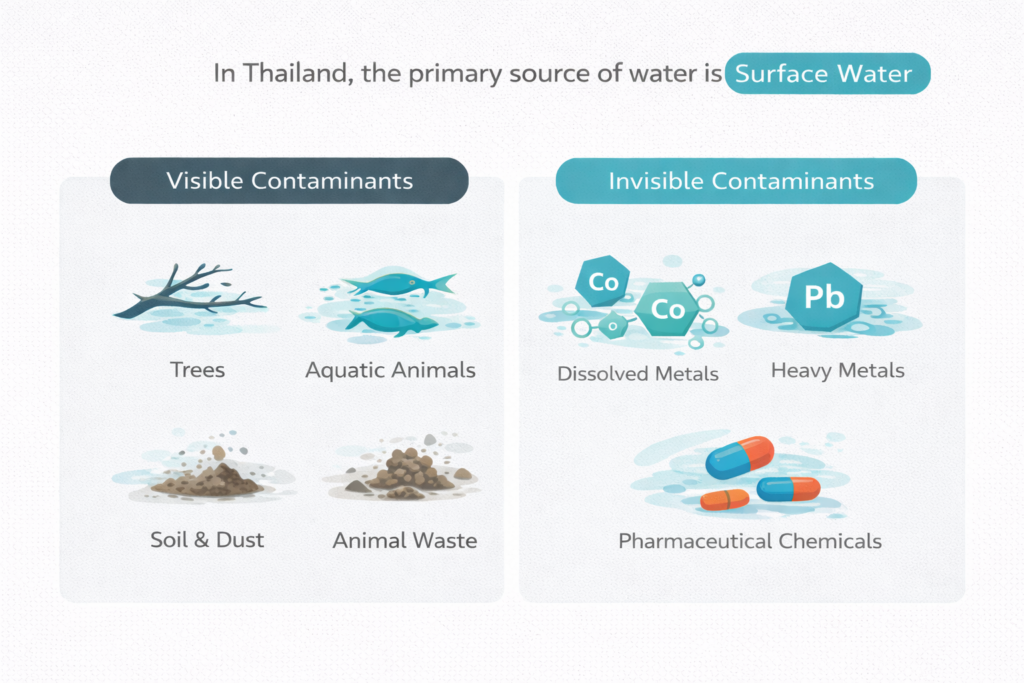
The primary source of water in Thailand is surface water. This includes lakes, rivers, reservoirs, and other bodies of water found directly on the surface.
The main issue with surface water is the amount and variety of contamination. Because it exists in an open environment, it is exposed to visible contaminants such as trees, aquatic life, animals, soil, and dust. Beyond what we can see, there are also invisible contaminants to consider, dissolved metals, heavy metals, and pharmaceutical chemicals.
While it does pass through treatment facilities before reaching homes, surface water is relatively easy to access but much harder to clean due to the wide range of contaminants present.
Water Source #2: Groundwater
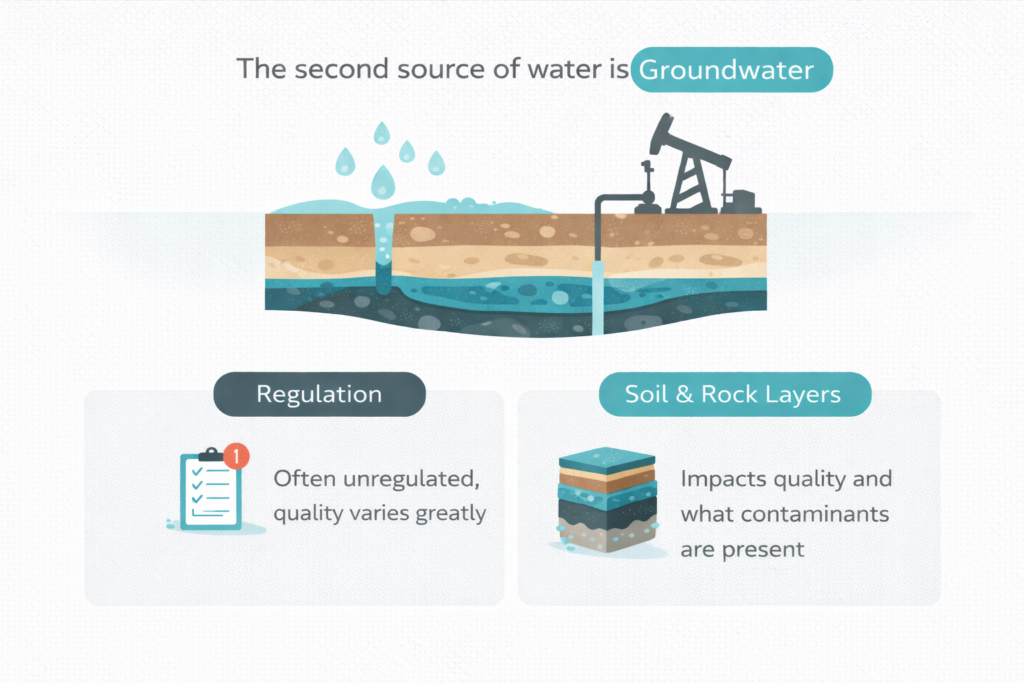
The second source is groundwater. This is water that starts on the surface and seeps through layers of soil and rock until it reaches underground aquifers. People access this water by drilling or digging and then pumping it up for use. This method is very common in Thailand and around the world.
The main concern with groundwater is regulation. Municipal tap water usually goes through treatment processes and meets certain standards. Groundwater, however, is often unregulated. That means you don’t really know what’s in it unless it’s tested. The quality depends heavily on the soil and rock layers it has passed through.
Water Source #3: Desalinated Water
The third source is desalinated water, taking seawater, removing the salt, and treating it until it becomes usable. This is a relatively new and very interesting technology, especially for water-stressed islands like Koh Phangan and Koh Samui that don’t have abundant freshwater sources.
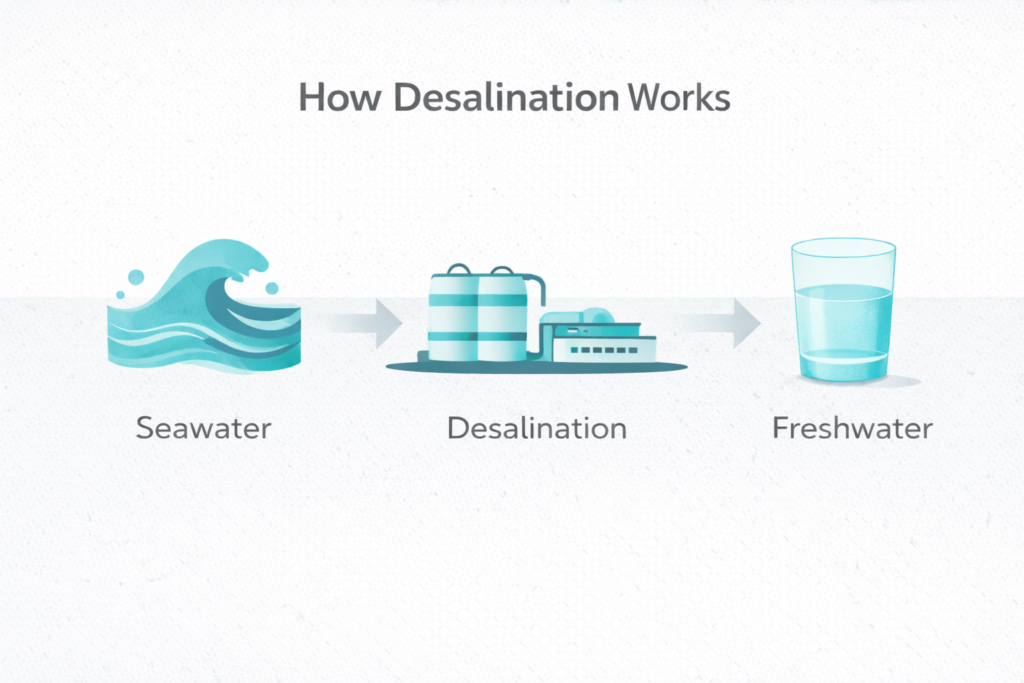
The UAE is currently leading in this technology. I covered an interesting investigation about the tap water in the Dubai. As water demand continues to rise, this technology will become more common. However, it comes with a major downside: it requires a significant amount of energy and money to operate.
Water Source #4: Rainwater Harvesting
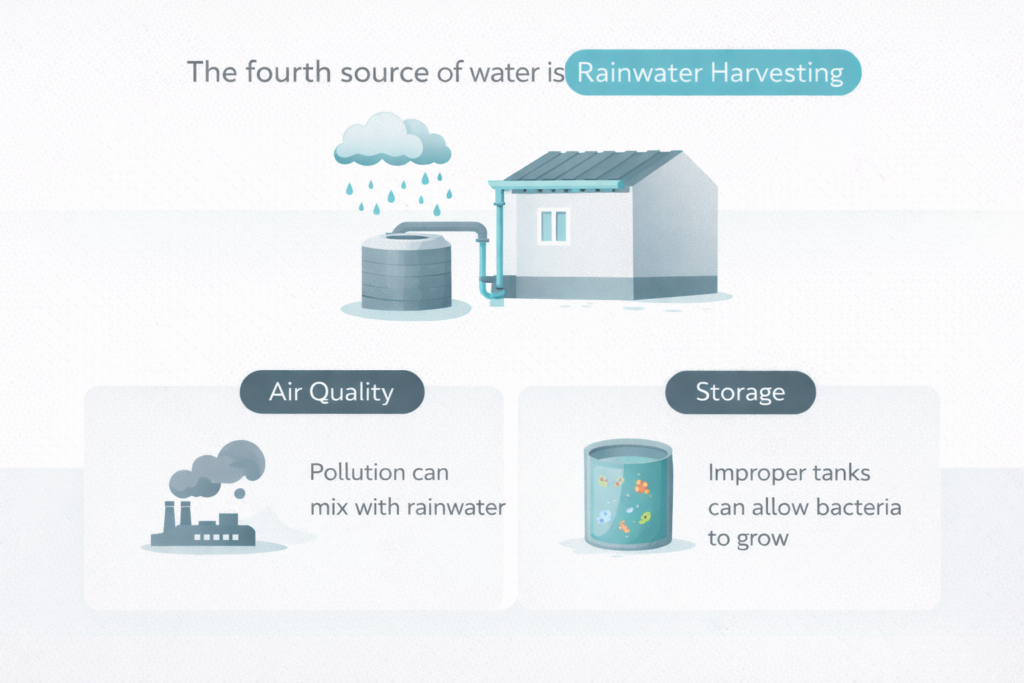
The fourth source is rainwater harvesting, simple, yet incredibly smart. Rainwater can be considered one of the cleanest sources because evaporation is a natural form of distillation.
However, two things must be kept in mind: air quality (pollution can mix with falling rain) and storage. As I mentioned, those storage tanks can become breeding grounds for bacteria if not maintained. If collected in a safe area with low air pollution, it is the purest water, but the infrastructure to harvest it is a high-difficult task.
Final Thoughts
So, what is in that water tank outside my hotel window? The answer is, it could be almost anything. It could be surface water, groundwater, desalinated water, rainwater, or a mix of several sources.
Now that we understand how scarce water is, it also becomes clear that not all water needs to be treated to drinking standards. For example, there’s no need to use potable water to flush toilets. Some places have even implemented smart piping systems that use seawater specifically for toilet flushing. This water management is a smart idea for water use but it will cause other fixture problems. Either way, we’re only the tip of the iceberg, each contaminant affects the body differently, which is exactly what I will cover in my next episode.
Watch my full video here.
Summary
- Surface Water: Easy to access but highly contaminated due to environmental exposure.
- Groundwater: Common but often unregulated; testing is essential before consumption.
- Desalinated Water: A promising solution for islands but is energy-intensive and costly.
- Rainwater: Can be the cleanest source, but air pollution and storage maintenance are key risks.
- Water Tanks: Can contain any combination of these sources and must be maintained to prevent bacteria.
- Smart Usage: Different tasks require different water quality, drinking water shouldn’t be wasted on flushing toilets.
Dos and Don’ts
Do: Investigate where your water is coming from.
Don’t: Assume all tap water comes from the same source.
Do: Ensure water tanks receive regular maintenance.
Don’t: Drink groundwater without getting a proper test first.
Do: Test groundwater before installing a filtration system.
Don’t: rely on visual clarity to judge water safety.
FAQ
Is the water in hotel tanks always municipal tap water in Thailand?
No. It can be surface water, groundwater, desalinated water, rainwater, or even a mix of several sources depending on the location and water scarcity.
Is groundwater safe in Thailand?
Not necessarily. Unlike municipal water, which is cleaned by the city to meet specific standards, groundwater is often pumped directly from the earth by private owners. Without regulation, you don’t know the contaminant levels unless you test it yourself. In short, I wouldn’t recommend it.
Is rainwater safe to drink directly from the sky?
While rain is one of the cleanest forms of water (naturally distilled), it can pick up pollutants from the air as it falls. Unless you’re sure of the air pollution around, I wouldn’t advise it.
Why isn’t desalination used everywhere?
Desalination is a “red” level difficulty because it requires a massive amount of energy and financial investment to build and operate the plants. Also, desalinated water becomes a type of water that is “hungry” and absorbs anything around it. This causes pipes to be more corrosive and other issues may arise.
Can you use seawater in your home?
Yes, but mainly for non-potable uses. Some smart infrastructure projects use salt water specifically for flushing toilets to save fresh water for human consumption. Check with experienced plumbers and water treatment experts as it may cause some fixture issues.