


An interview with Mr. Woody, CEO of NEO Water Systems
If you own property in Phuket and are thinking about installing a water filter, the first question you should ask is simple: What is your water source?
I interviewed Mr. Woody, CEO of NEO Water Systems, to break down the reality of Phuket’s water quality. With over 15 years in the local market, he explains which systems actually work, and which ones are a waste of money, depending on whether you’re on municipal tap water or a private well.
We separate the solutions into two main categories:
- Municipal tap water (PWA / Provincial Waterworks Authority)
- Groundwater (Private wells and boreholes)
____________________________________________________________________________
1. Understanding Phuket’s Municipal Tap Water
Q: Let’s start with tap water. What are the main problems with municipal water in Phuket?
Mr. Woody: City water in Phuket is generally okay. It is provided by the Provincial Waterworks Authority and has already gone through treatment. The main issue isn’t the treatment itself, it’s what happens after. Most problems come from particles like dust, sediment, rust, hair, or leaves entering the water, especially when pipes are repaired or reconnected.
Q: So the main concern is “mechanical dirt” we can see?
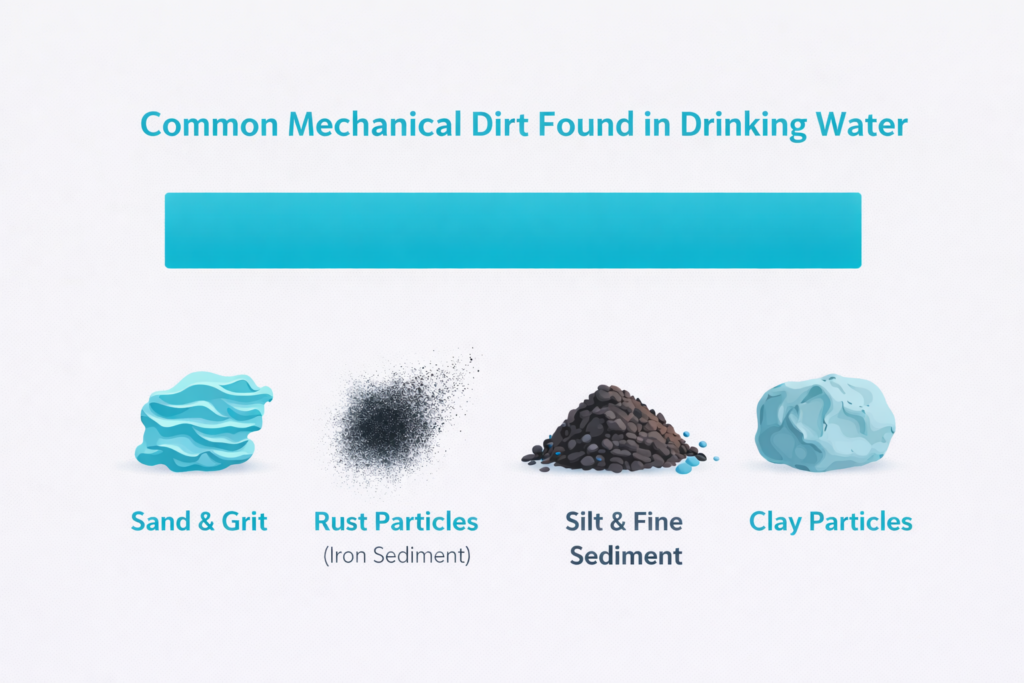
Mr. Woody: Yes, mostly that. Iron is basically zero in municipal water because they have a good process to remove it at the treatment plants. You might find a little hardness, but very little.
Q: What about bacteria? People often worry about that in Thailand.
Mr. Woody: Bacteria can be found sometimes, but they add chlorine to the water. That is necessary; otherwise, we would drink bacteria, which is not good for the tummy.
Recommended Filtration for Tap Water Homes
Q: If someone uses municipal water, what filter do you recommend first?
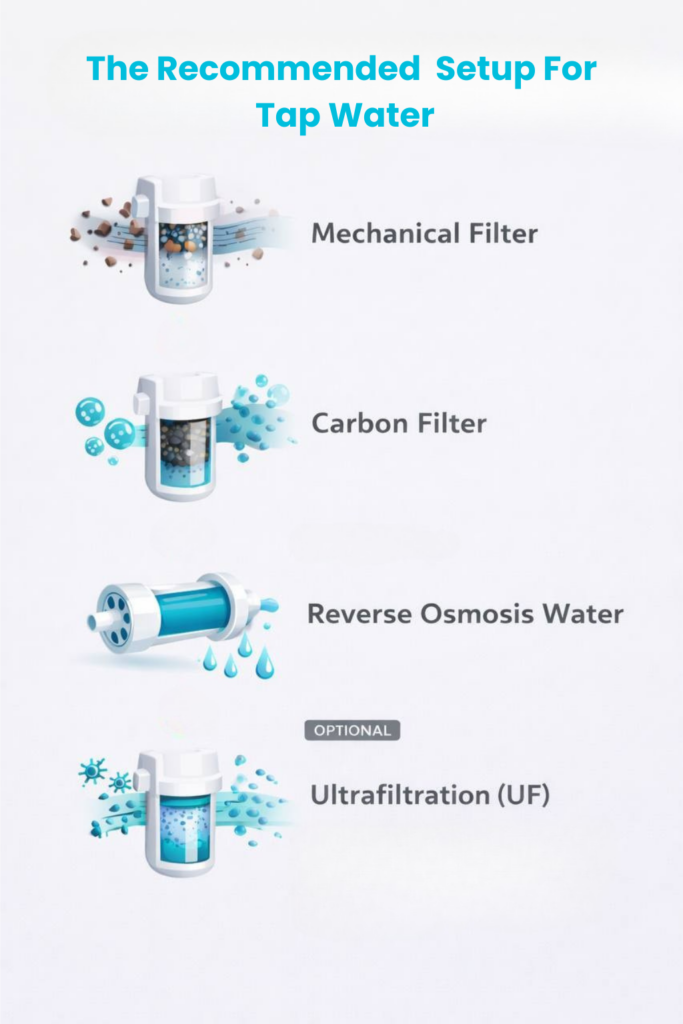
Mr. Woody: A simple mechanical filter. It removes the rust and dirt you can see, which is enough to protect your house appliances.
Q: Is that safe for drinking?
Mr. Woody: No, not recommended. For drinking water, you need a separate system like Ultrafiltration (UF) or Reverse Osmosis (RO).
Q: What role does carbon play?
Mr. Woody: Activated carbon removes the smell and some metals. In Phuket, metal levels in tap water aren’t high, so carbon is mainly used for the odor caused by old pipes.
2. Groundwater in Phuket: An Expert Overview
Q: Let’s move on to groundwater. What’s the biggest issue there?
Mr. Woody: Iron. It is everywhere in Phuket. No matter where you dig, you are going to find iron.
Q: Is iron dangerous?
Mr. Woody: It isn’t immediately dangerous, but too much is not good for the kidneys. It also leaves very ugly residue on faucets, sinks, and tiles. It’s better to remove it.
The Groundwater Filtration Stages Explained
Q: What filtration stages are needed for groundwater?
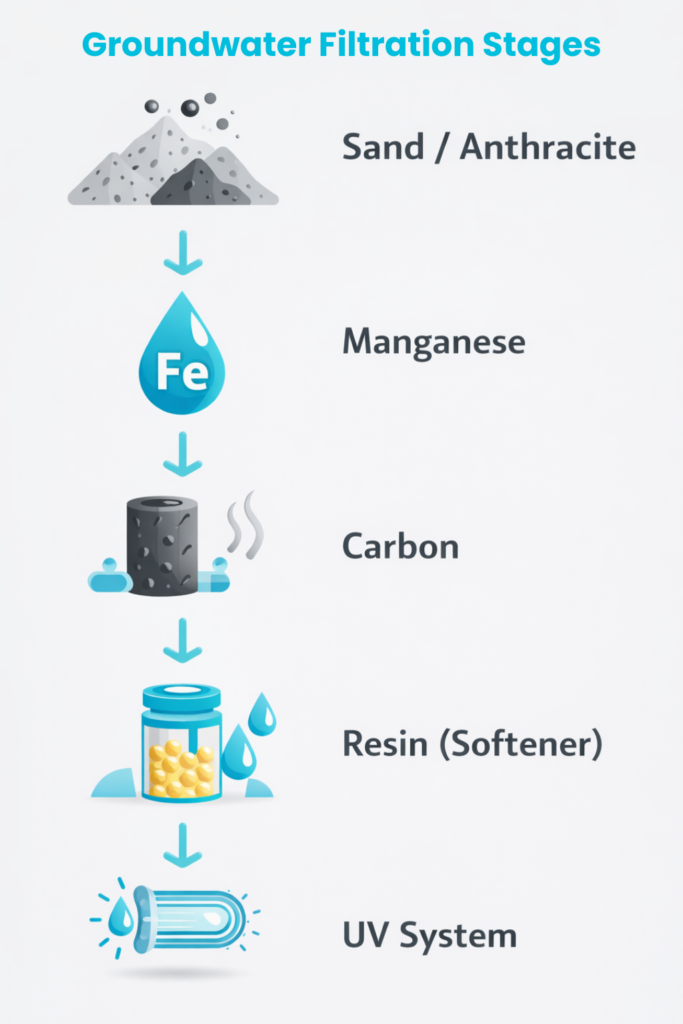
Mr. Woody: Because groundwater is unregulated, you need more steps:
- Sand / Anthracite: For large particles and dirt.
- Manganese: Specifically for iron removal.
- Activated Carbon: For smell, taste, and VOCs.
- Resin: For hardness (calcium and magnesium) which leaves white stains.
- Ultrafiltration (UF): A fine filter (0.01 micron) that can catch bacteria.
- UV System: To kill viruses and bacteria.
Q: Is Phuket groundwater always hard?
Mr. Woody: About 50% of the time. I recommend a simple DIY test to check your specific mineral levels.
3. Can You Drink Filtered Groundwater?
Q: After all these filters, is groundwater finally drinkable?
Mr. Woody: Still not recommended. Even with multiple stages, you should not rely on it for drinking.
Q: So what is the only safe option for drinking water?
Mr. Woody: Reverse Osmosis (RO) water is the only option here.
Q: Why RO?
Mr. Woody: RO membranes are a genius technology. While a standard cartridge filter might be 5 microns, a UF filter is 0.01 micron. But an RO membrane is even finer, it only accepts pure H2O. Anything that is dissolved in the water (salts, minerals) that you can’t see, the RO membrane blocks and throws away.
You can watch the interview here.
Final Thoughts
Understanding water filtration in Phuket doesn’t have to be a guessing game. As Mr. Woody highlighted, the key is understanding that your filtration needs are dictated entirely by your water source. While municipal water requires protection against the “journey” through old pipes, groundwater demands a much more aggressive, multi-stage defense against natural minerals like iron and hardness. Ultimately, the goal is twofold: protecting your home’s infrastructure and ensuring your family has access to pure drinking water. By choosing the right technology, you can enjoy peace of mind and high-quality water throughout your property.
Summary
- Municipal Water: Focus on mechanical filters and carbon to protect your home from pipe sediment and chlorine smells.
- Groundwater: You need a multi-stage system (Sand, Manganese, Resin, UV) because the water is unregulated and naturally high in iron.
- Drinking Water: Use Reverse Osmosis regardless of your source. It is the only way to ensure pure H2O by blocking dissolved solids that other filters miss.
- Health & Maintenance: Removing iron is better for your kidneys, and keeping a UV or UF step ensures your water is biologically safe from bacteria.
- Testing is Key: Since Phuket’s water quality can change from one street to the next, a professional consultation or DIY test should always be your first step.
Do’s and Don’ts
Do: Match the technology to your water source. A system designed for city water will fail if used for groundwater, and vice versa.
Don’t: Rely on “sight and smell” for safety. Many harmful contaminants, such as bacteria or dissolved minerals, are completely invisible and odorless to the human senses.
Do: Prioritize the removal of Iron and Hardness. Since these are the most common issues in Phuket, ensuring your system has specific media (like Manganese and Resin) is essential for protecting your property.
Don’t: Assume municipal water is “ready to use”. Even if the treatment plant is perfect, the old and repaired pipe infrastructure can still introduce sediment and rust into your home.
Do: Install both full house filtration as well as a separate filter for drinking water. Understand that while whole-house systems protect your pipes and skin, only a dedicated high-precision system like Reverse Osmosis ensures safe consumption.
Don’t: Believe in “one-size-fits-all” solutions. In a place like Phuket with unregulated groundwater, a small, generic filter is rarely enough to handle the heavy mineral loads.
Do: Value professional testing over guesswork: Because Phuket’s water quality varies from one neighborhood to the next, having data about your specific water is the only way to choose the correct system.
Don’t: Forget the power of dissolved solids. Standard mechanical filters only catch what is “floating” in the water; remember that there are other things like dissolved chemicals and salts to be removed.
FAQ
Is Phuket tap water (PWA) safe to drink directly from the faucet?
No. While the Provincial Waterworks Authority treats water to meet safety standards at the plant, it is not recommended to drink it directly from the tap. Contaminants such as rust, sediment, and bacteria often enter the water during its journey through aging or repaired pipes. To make municipal water safe for consumption, homeowners should install at least an Ultrafiltration (UF) or Reverse Osmosis (RO) system at the point of use.
Why does my Phuket groundwater turn orange and stain my sinks?
The orange staining is caused by high levels of iron, which is naturally occurring in Phuket’s soil. When this iron-rich groundwater is exposed to air, it oxidizes and creates rusty-brown deposits. To prevent these “ugly” stains and protect your plumbing, a dedicated Manganese filter is required to oxidize and trap the iron before it enters your home.
What is the difference between Reverse Osmosis (RO) and Ultrafiltration (UF) for Phuket homes?
The main difference is the level of purity. Ultrafiltration (UF) uses a 0.01-micron membrane to block bacteria and sediment while keeping minerals (and other dissolved things) in the water. Reverse Osmosis (RO) is much finer (0.0001 microns) and removes almost everything, including dissolved salts and minerals. RO is the gold standard for drinking water in Phuket.
Does Phuket have “hard water,” and do I need a water softener?
Approximately 50% of groundwater sources in Phuket are considered “hard,” meaning they contain high levels of calcium and magnesium. This leads to white limescale buildup that can destroy water heaters and clog showerheads. If a water test shows high mineral content, a Resin (Ion-Exchange) filter is essential to soften the water and extend the lifespan of your appliances.
Why is a whole-house water filter necessary even if I only drink bottled water?
Yes, even if you don’t drink the water, it’s best to have a POE filter. unfiltered water can be costly. In Phuket, sediment and rust from city pipes or iron and scales from wells can ruin expensive washing machines, dishwashers, and water heaters. A whole-house system acts as a shield, ensuring that the water used for bathing and cleaning doesn’t damage your property’s infrastructure or stain your laundry.