

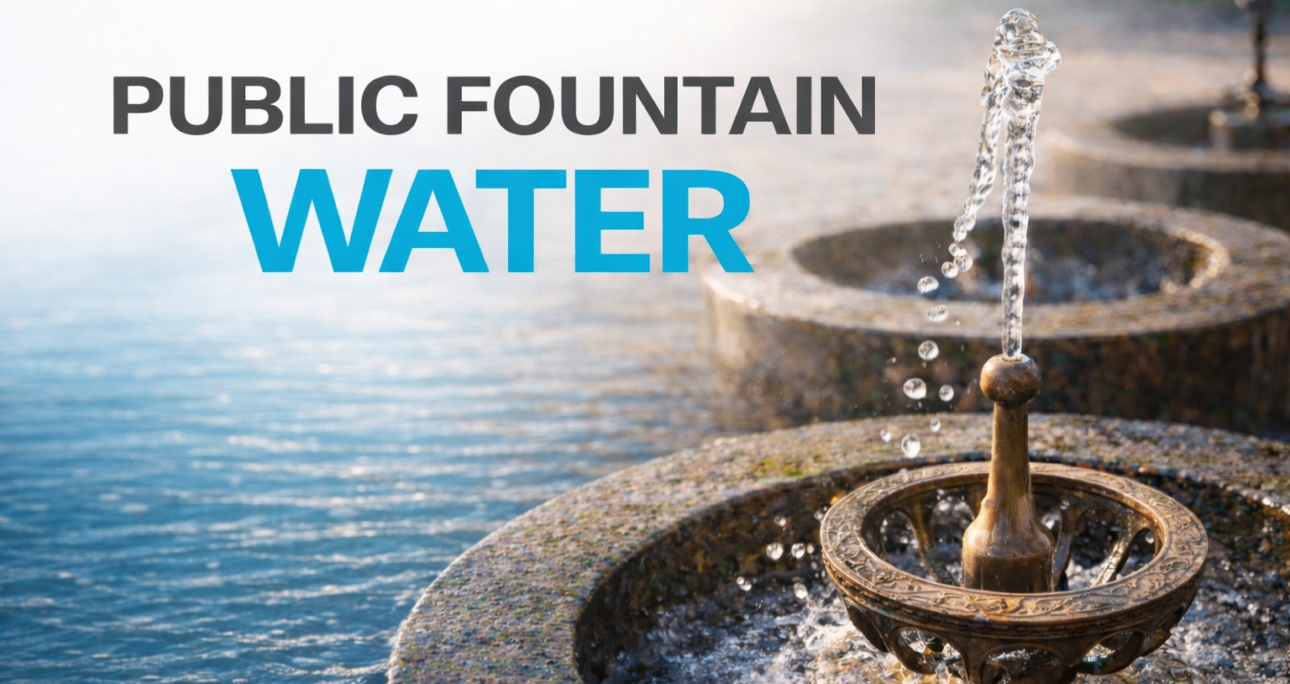
Public water fountains are one of those things we all have an opinion about. Some people won’t go near them, others drink without thinking twice, and then there’s a big group in between, hesitant, unsure, and wondering if that quick sip is actually worth the risk, if there is one at all.
As someone who is deeply invested in water quality, I see these fountains as more than just plumbing; they are a symbol of a community’s heart. In my home country of Armenia, we even have a special name for them: Pulpulak (ցայտաղբյուր). The name mimics the “pulp-pulp” sound of the water bubbling up.
But while the idea of a pulpulak is beautiful, the reality depends on many things like maintenance, water source, hygiene and more Let’s talk about how to make smarter, safer decisions when you’re thirsty and standing in front of a public tap.
Can you Drink Directly From Public Water Fountains?
The short answer is: you can do whatever you want but whether you should, depends on a few key factors.
To be honest, I only drink from public fountains if I absolutely have to. If I’m out, I’m exhausted, and I’m really, really thirsty, my body needs that water.
It is important to keep in mind that public fountains aren’t all created equal. There is a massive difference between a modern, well-maintained fountain in a bustling airport or hotel that has safety plans and cleaning schedules are usually a priority, and an aging, neglected fountain on a dusty street corner which may lack of proper cleaning (bacterial buildup, especially around spouts)
Before you lean in, remember that the safety of the water depends on two main things:
- The Source & Treatment: In many cities, municipal water is treated with residual chlorine to kill off pathogens as the water travels through the pipes. If you can’t smell even a faint hint of that “clean” pool-like scent, it might mean the chlorine has dissipated, leaving the water vulnerable to bacterial regrowth.
- The Infrastructure: Even if the city water is perfect, the condition of the internal plumbing in an old fountain can introduce lead, copper, or biofilms into your glass.
- Frequency of use: How often does the water circulate? If many people are using the fountain then the water that is stopped right at the fountain tip has been renewed frequently. If not, then that water becomes stagnant water and inside pipes can grow harmful bacteria.
So the decision to drink starts with observation as there are hints from the aesthetics you can evaluate before making your call.
The Risks of Drinking From Public Water Fountains
The biggest risk usually isn’t the water itself, it’s the faucet and the immediate surroundings because usually public fountains are connected to the tap water supply (aka municipal water).
The first thing to consider is the potential presence of pathogens.Bacteria love moisture, and a public fountain is a 24/7 “wet zone.” When a surface stays damp and isn’t scrubbed regularly, it becomes the perfect environment for a biofilm (a sticky layer of bacteria) to grow. If you notice any of these “Red Flags,” it’s a sign that the fountain is not being maintained:
- Slimy Textures: If the metal or stone feels slippery to the touch, that’s bacteria.
- Green Algae: Common in outdoor fountains exposed to sunlight; it indicates the water has been sitting stagnant.
- Black Mold-like Spots: These often hide right under the rim of the nozzle where the water comes out.Mold in damp environments can be a sign of poor sanitation and can trigger sensitivities in some people.
- Lastly, if you see animals like dogs, birds, or ducks drinking from or sitting on the fountain, that’s another sign it may not be safe for human use.
Tip: Tip: Before drinking from a public water fountain, always check the water flow and cleanliness. If the drain is clogged or water is pooling at the bottom, it could splash back and contaminate the nozzle. Look for a high, clean arch of water and a clear, fast-draining basin to reduce the risk of cross-contamination. While many newer fountains have built-in filters and better designs for hygiene, it’s still important to do a quick visual check to make sure the fountain is safe to use.
How to Choose a Safer Water Fountain
Here are 4 things I look out for when I’m deciding whether to drink; I always look at the big picture first. It’s not just about the water; it’s about everything around it.
1. Environment Matters: I always look around. Is the fountain next to a busy road with heavy traffic or a construction site? Are there trash cans or a sewage system nearby? Air pollution and dust settle directly onto these fountains, so if the air feels dirty, I’m much more cautious.
2. Our Furry Friends: In Armenia, we have a lot of stray dogs. These dogs need water, and they do drink from the pulpulaks. I’m glad they have a place to drink, but we have to be honest, that is a point of contamination. If you see animals using it, you need to be aware of that before you lean in.
3. Location is a Clue: I’ve noticed that a well-maintained fountain in an airport, a hotel, or a large public space is very different from one on a dusty street corner. Those indoor or high-traffic professional spaces usually have better monitoring to make sure standards are being met. They probably also have ones with filters inside.
4. Let the water run a few seconds before drinking, and never touch your mouth to the spout.
Here is the video where I tested a water fountain in Yerevan.
Tip: If you did a visual test and it’s fine, go for it, that one sip won’t hurt you but keep an eye out for long term exposure.
The Hidden Cost of Armenia’s pulpulaks: Why We Need to Rethink the Endless Flow
“Pulpulak” is a deeply rooted part of our heritage. Many were built in the 20th century as memorials or gifts to the community, turning a basic necessity into a point of connection. They are iconic, and they represent a beautiful ideal, but they also have a “hidden” side: they never stop flowing. In a world where water is becoming a precious global resource, we have to look at the numbers.
I recently learned a statistic that is hard to ignore: up to 65% of Armenia’s water is wasted. This massive loss comes from a combination of aging infrastructure, outdated plumbing systems, and these very same continuous-flow fountains (pulpulaks). Water flows in and it keeps flowing out. But where does it all go?
In a world where some countries are literally fighting over water rights, this level of waste is something we need to rethink, without losing the cultural meaning behind our fountains. Maybe the future lies in smarter design, better flow control, or sensor-based technology. Whatever the solution, doing nothing isn’t sustainable. We can love our heritage and still demand better efficiency for the next generation.
Watch my full video here
Final Thoughts
Being cautious doesn’t mean being “anti-fountain.” These landmarks are a vital part of our urban landscape and a beautiful symbol of community. The goal isn’t to stop using them, but to use them with a higher level of awareness.
When we are out and thirst hits, public water fountains are a lifesaver. But we should always make it a habit to stay aware. By looking at the environment, checking the surface of the nozzle, and trusting our instincts, we can enjoy these resources safely.
One of the most important things to understand is how water safety impacts health over the long term. Drinking slightly contaminated water just once is unlikely to cause harm, especially for locals whose bodies are already adapted to the local water profile. However, long-term exposure is where the real risks lie.
Most water-related health issues aren’t the result of a single sip; they come from repeated exposure to small amounts of contaminants over weeks or months. This is why being mindful of your daily water source is the best way to protect your health for the future.
Summary
- Not all fountains are created equal. A well-maintained airport station is a world away from a dusty street-corner pulpulak.
- The condition of the faucet and the environment (construction, traffic, trash) matters just as much as the water source itself.
- Algae (green), slime (biofilm), and mold-like spots (black) are immediate red flags to walk away.
- Fountains in modern hotels, airports, or large chains are generally safer because they follow strict, monitored maintenance schedules.
- While culturally beautiful, Armenia’s pulpulaks contribute to a staggering 65% water waste, a system that needs smarter design for a sustainable future.
- One sip of “off” water rarely causes harm, but repeated daily exposure to small contaminants is where the real health risks begin.
Do’s and Don’ts
Do: Perform a visual inspection. Look for a clean nozzle and a clear basin. If the fountain looks scrubbed and well-maintained, it’s a good sign.
Don’t: Touch slimy or moldy surfaces. If you see green algae or black spots under the rim, the water is passing through a bacterial biofilm.
Do: Check the neighborhood. Look at the 5-foot radius around the fountain. You want to see a space clear of trash, construction dust, or stagnant puddles.
Don’t: Ignore external pollution. Avoid fountains located directly next to heavy traffic, exhaust vents, or sewage grates. Airborne particles settle on the nozzle.
Do: Prioritize Regulated Spaces. When possible, choose fountains in airports, hotels, or modern office buildings. These usually have monitored filtration and cleaning logs.
Don’t: Make it a daily habit. While one sip is rarely an issue, don’t make a neglected fountain your primary water source. Long-term exposure to trace contaminants is where health risks accumulate.
FAQ
Is public fountain water immediately dangerous?
Usually no. If you’re healthy, a single drink from a standard fountain is unlikely to make you sick. The real concern is long-term exposure. Health issues from water often build up over time due to repeated exposure to small amounts of contaminants, rather than a one-time sip. But if you’re a germaphobe, that’s a different story.
Are Armenian pulpulaks filtered?
Most pulpulaks rely on the quality of the city’s source water. While the source in Armenia is often excellent, pulpulks do not have built-in filters. Aging infrastructure and faucet hygiene are the two biggest factors that can change the water quality by the time it reaches you.
Is bottled water always safer than a fountain?
Generally, yes. But it depends on the brand. Bottled water from well-known companies is usually subject to stricter regulations and quality controls than public water fountains. While municipal tap water is regulated and tested, the testing is done at the treatment plant — not at the fountain itself. That means the water may be clean at the source, but the fountain nozzle or pipes might still be contaminated. Unlike bottled water, fountains don’t have a dedicated body ensuring sanitation at the point of use.
Can we just put filters on every pulpulak?
While that sounds ideal, filters require regular replacement. A neglected filter can actually be more dangerous than no filter at all, as it can become a breeding ground for bacteria. This is why monitoring and maintenance are more important than the hardware itself.
Are pulpulaks good for Armenians?
Yes, culturally, socially, and practically, pulpulaks have played an important role in Armenian life. They provide free access to drinking water, which supports public health, especially during hot summers, and historically they were acts of community care and remembrance. They turned water into a shared social resource rather than a private commodity. The concern today is not that pulpulaks are “bad,” but that aging infrastructure and continuous-flow designs no longer align with modern sustainability standards. The goal should not be to remove them, but to modernize how they operate so they remain both culturally meaningful and environmentally responsible.
Is it safe to drink from a pulpulak in Armenia?
Often, yes, but not without awareness. Armenia’s source water is generally high quality, especially from mountain-fed systems. However, pulpulaks usually do not have built-in filtration at the point of use, which means the water quality you experience depends on the condition of the pipes feeding the fountain, how frequently the fountain is used, and how clean the nozzle and basin are. If the fountain appears well maintained, the water runs clearly with good pressure, and there are no signs of algae, slime, or animal contamination, drinking from it is usually low risk for a healthy person. The bigger concern is making neglected fountains a daily water source rather than taking an occasional sip.
Are pulpulaks the cause of Armenia’s water waste?
They are a contributor, but not the only reason. Water loss in Armenia results from several factors, including aging underground pipes, leaks, inefficient irrigation systems, and outdated plumbing networks, in addition to continuous-flow public fountains like pulpulaks. Because pulpulaks run nonstop, they represent a visible symbol of water loss, but they are part of a much larger infrastructure challenge. Blaming them alone oversimplifies the issue. The real solution lies in system-wide modernization rather than the removal of cultural landmarks.