
Recently, I was in the U.S. for the Water Quality Association (WQA) conference April 22, 2025, and during conversations with industry experts, I came across something that stopped me in my tracks: lithium in drinking water. Not as a medication. Not as a battery. But as a naturally occurring and industrially influenced contaminant, especially in California and the western United States.
While we’ve been busy worrying about the “usual suspects” like PFAS, Lithium has been quietly slipping under the radar.
That’s when I decided to stop guessing and do what I always do:speak directly with someone working inside the data.
Lithium Levels in West Coast US Water: The Unseen Spike in California Tap Water
Lithium doesn’t announce itself with color, taste, or smell. Most people drinking it have no idea it’s there. It isn’t that the authorities are ignoring it; in fact, it caught the EPA’s attention lately and they did start a monitoring program right now called UCMR 5 . But here’s the catch: because lithium isn’t yet legally regulated, there is no “red line” and water treatment facilities aren’t forced to stay under.
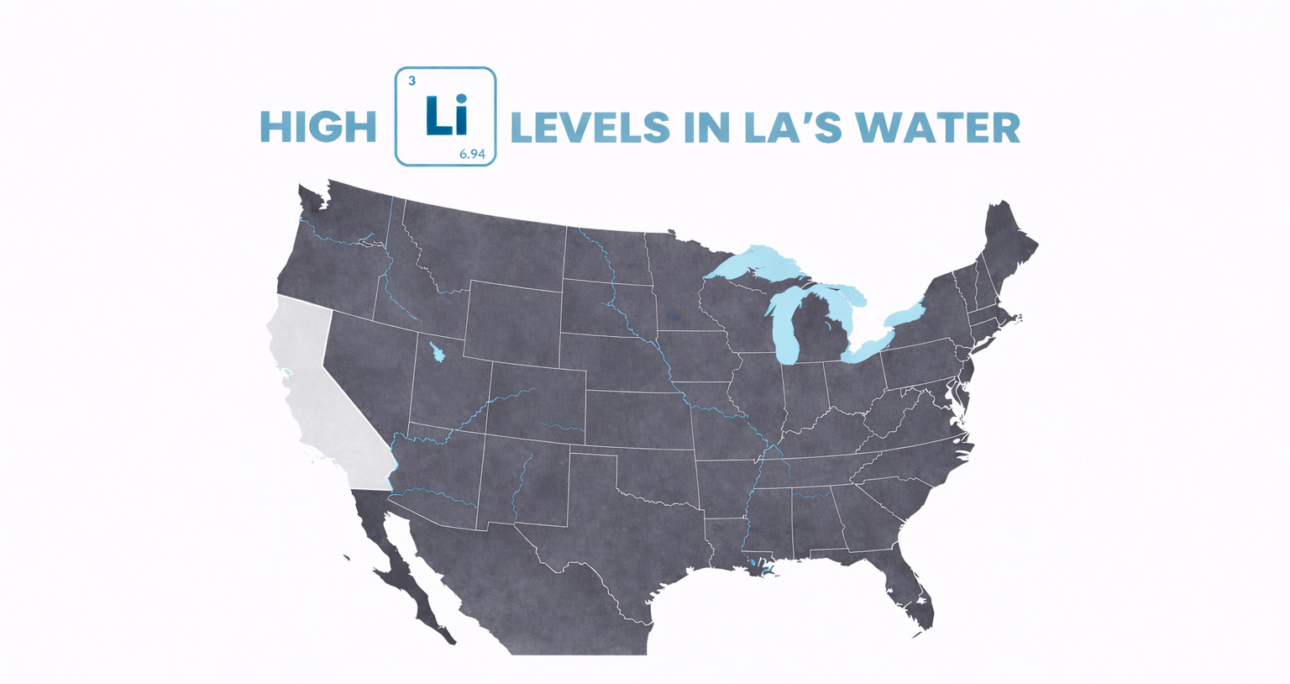
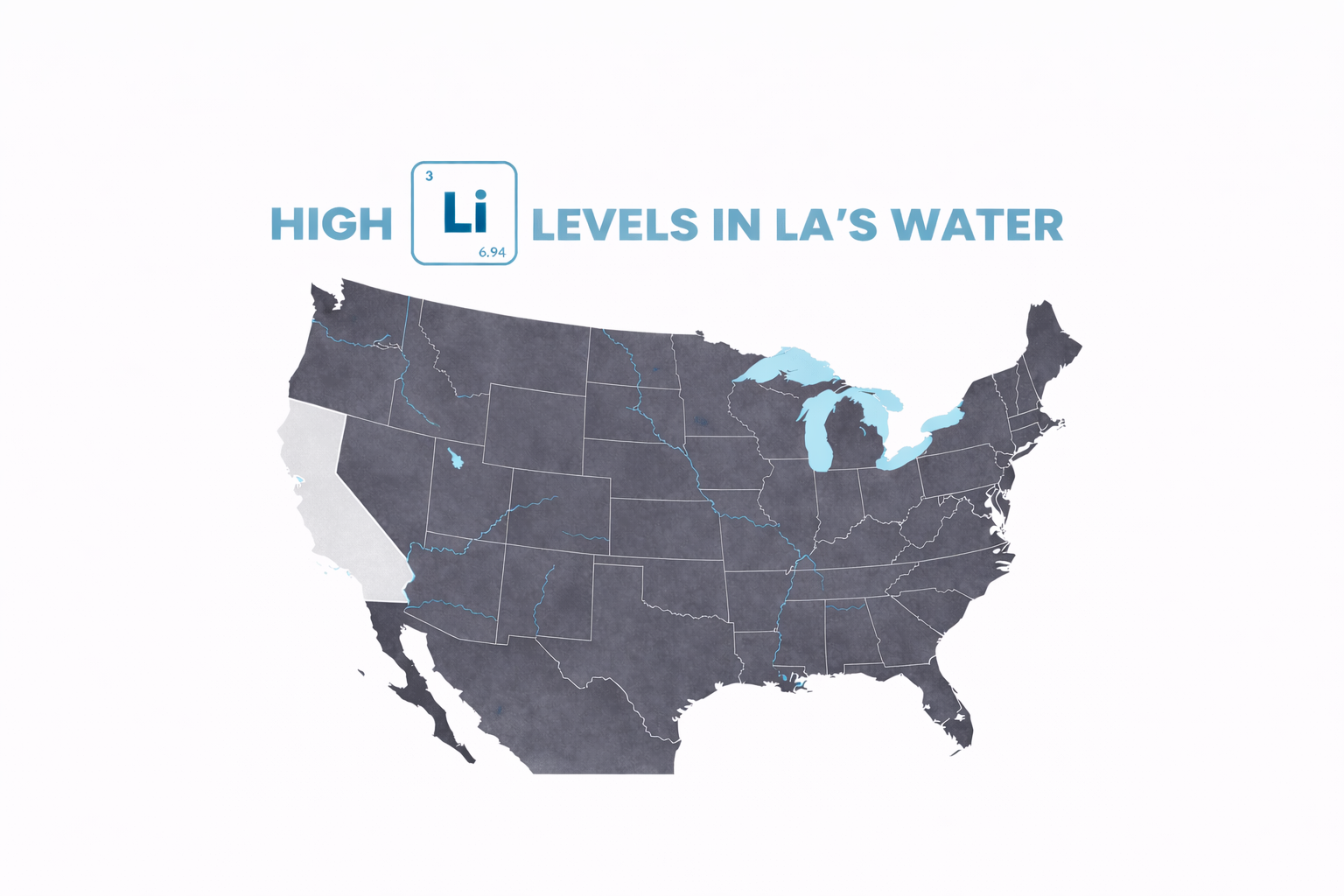
The EPA’s current data shows that lithium concentrations in parts of California and neighboring states are significantly higher than anyone expected. When I spoke with Mr. Li, a product developer at Kinetico who tracks this data, he explained that lithium has flown under the radar for years, not because it’s rare, but because it’s unregulated.
According to Mr. Li, the monitoring results are surprising :
- The Baseline: The EPA uses 10 parts per billion (ppb) as a health-based screening level.
- The Reality: In many tested areas, the average is 35 ppb—triple the screening level.
- The Spikes: In certain Western “hot zones,” concentrations have hit a massive 960 ppb.
- The Reach: About 25.6% of public water systems (particularly in California, Utah, and Arizona) are already testing above that 10 ppb mark.
As the saying goes: If you don’t test for something, you won’t find it. While your local water might look “a-ok,” if they aren’t looking for lithium, you’d never know you were drinking concentrations that researchers are now linking to chronic kidney issues and even potential neurodevelopmental risks.
Tip: Don’t want to spend hours reading boring city water reports? If you’re one who doesn’t like to read boring city water reports you can always opt forJ: Reverse Osmosis (RO) is the only home filter that consistently removes lithium and everything else from your water. Most standard fridge filters or pitchers only fix the taste; they don’t catch dissolved metals.
Health Risks: When Lithium Becomes a Problem
According to Mr. Li, the danger isn’t in a single glass of water, it’s in the chronic, long-term exposure. Because lithium is a pharmaceutical drug used to treat mood disorders, we already know exactly what happens when the body gets too much of it.
While a low trace amount might go unnoticed, chronic exposure to the higher levels being found in West Coast “hot zones” can have a “slow-burn” effect on your health. Mr. Li and current medical research highlight four major areas of concern:
- Kidney Function: Lithium is processed almost entirely by the kidneys. Over time, high concentrations can lead to interstitial nephropathy (chronic kidney disease) or decrease the kidneys’ ability to concentrate urine.
- Thyroid Health: Lithium is notorious for interfering with iodine uptake, which can lead to hypothyroidism (an underactive thyroid), causing fatigue, weight gain, and brain fog.
- Nervous System Balance: Even at non-lethal doses, chronic ingestion can lead to tremors, muscle weakness, or a “dazed” feeling as it affects how nerve signals travel through the brain.
Early Brain Development: This is perhaps the most startling new discovery. A recent UCLA Health study found that pregnant women exposed to higher levels of lithium in their drinking water had a significantly higher risk of their children being diagnosed with Autism Spectrum Disorder (ASD).
Can Low Levels Be Beneficial?
Here’s where things get complicated. I found an interesting video by Antoine Walter who is a water engineer where he made a video that mentioned something surprising: “micro-dosing” lithium might actually be a good thing.
It sounds counterintuitive, but some studies suggest that very low, trace concentrations of lithium in drinking water could have potential benefits:
- Mood & Mental Health: Research across the US, Japan, and Europe found that areas with naturally occurring trace lithium had lower suicide rates.
- Neuroprotection: Some scientists believe trace levels help stabilize “brain aging” and could potentially reduce the risk of Alzheimer’s and dementia.
- Physical Health: There is even emerging (though early) research looking into its effects on type 2 diabetes and inflammation.
But when I brought this up, Mr. Li was very clear on one vital point:
There is a massive difference between “trace exposure” and “uncontrolled intake.”
The problem isn’t lithium itself, it’s transparency. When the EPA finds “averages” of 35 ppb and “spikes” of 960 ppb, we aren’t talking about controlled levels anymore. We are talking about a reactive metal entering your body at levels that haven’t been safety-tested for long-term consumption.
As I always say: I’m not a water engineer, but I am a person who wants to know what’s in my glass. Whether lithium is a “magic ion” for mood or a threat to your kidneys, you deserve the right to choose your dose, not have it chosen for you by your tap.
Tip: If you’re interested in the mood-boosting benefits of lithium, talk to a doctor about controlled mineral supplements. Getting your lithium from the tap is like taking a mystery pill with no label, you never know if you’re getting a tiny “micro-dose” or a toxic “mega-dose.” You can opt for an RO system and start with a blank page as RO removes everything from your water. So, filter first, then supplement with intention!
The Growing Lithium Demand Crisis
If you have the mind of a genius, I know what you’re asking: Where is all this lithium coming from, and why is it suddenly everywhere?
It isn’t just electric vehicles (EVs). Lithium is in your iPad, your smartphone, your laptop, basically anything with a heartbeat and a charging port. Demand is absolutely exploding, and the numbers are staggering:
- The 5-Year Surge in demand: Lithium demand is predicted to grow 30x in just the next five years.
- The 2050 Forecast: By 2050, we are looking at a 100x increase in demand.
- The Expiration Date: At this rate, some studies suggest our current lithium reserves could be exhausted in just 25 to 30 years.
Here is the “dirty secret” of the green revolution: while we are buying more electronics than ever, only about 5% of lithium batteries are actually recycled. That means 95% of our old tech is sitting in landfills, where the lithium can eventually leach back into the soil and groundwater.
As I always say, everything is related to water. When you see those ads about “caring for the environment,” they aren’t just fluff, they mean something. More demand means more aggressive mining. More mining (especially the water-heavy “brine” extraction used in the West) means more pressure on our already stressed-out water tables. Every laptop we don’t recycle and every battery we toss in the trash eventually circles back to the water we drink.
Tip: Be a “Battery Hero”, next time you upgrade your phone, don’t just toss the old one in a junk drawer or the trash. Take it to a certified e-waste recycler (places like Best Buy or Staples usually have free drop-off bins). It sounds small, but keeping that lithium out of the landfill is the best way to make sure it doesn’t end up back in your tap water!
Final Thoughts
Everything circles back to the water. As we move into an era of electric vehicles and 100x lithium demand, we have to make sure our progress doesn’t come at the expense of our health. We’ve seen that lithium is a silent passenger in LA’s water supply, unregulated, unmeasured, and often ignored.
I’m not telling you this so you’ll fear your faucet, but so you can take control. Whether lithium is a trace mineral that helps our mood or a risk to our kidneys depends entirely on the dose and you deserve to know what that dose is.
This is not only about the contaminant that isn’t regulated at the moment but to any other ones that may raise concerns. Best would be to test your water, recycle your tech, and if you’re in a “hot zone,” consider a Reverse Osmosis system. Your kidneys (and your peace of mind) will thank you for it. I met TapScore during a water conference and was impressed by their certified testing process. If you’re looking to test your water quality and want results you can trust, I’d genuinely recommend checking them out: https://mytapscore.com/collections/city-water-test-kits
Summary
- Lithium is currently unregulated in U.S. drinking water. While the EPA is monitoring it through the UCMR 5 program, there are currently no enforceable legal limits, leaving many cities with levels well above health screening guidelines.
- While the health reference level is 10 ppb, some areas have seen averages of 35 ppb and extreme spikes reaching nearly 1,000 ppb.
- Chronic exposure to Lithium is the primary concern. Recent UCLA research suggests a potential link between high lithium levels in maternal drinking water and increased autism risk in children, alongside known impacts on kidney and thyroid health.
- As we shift toward a green economy, the demand for lithium is projected to grow 100x by 2050. However, with only 5% of electronics currently recycled, much of that lithium risks leaching back into the groundwater we rely on.
- Standard carbon filters and pitchers generally do not remove dissolved lithium. Reverse Osmosis (RO) remains the gold standard for home protection, capable of stripping out over 90% of lithium and other emerging contaminants.
Do’s and Don’ts
DO: Install a Reverse Osmosis (RO) system to strip out over 90% of dissolved lithium, and always test your specific tap annually to monitor unregulated contaminants.
DON’T: Rely on standard pitcher or fridge filters for lithium removal, and never toss old batteries in the trash where they can leach into the groundwater we drink.
DO: Take old electronics to certified e-waste recyclers like Best Buy or Staples to ensure lithium stays in a closed-loop system rather than a landfill.
DON’T: Ignore your Water Quality Report (CCR); even if lithium isn’t legally limited yet, checking the “unregulated” section tells you what’s actually in your glass. Even if you’re using groundwater
DO: Contact the manufacturer or a local hazardous waste program if you find a “swollen” or leaking lithium battery; these require immediate specialized handling and should never be put in a regular mail-back or retail bin.
DON’T: Assume bottled water is a safer alternative to filtered tap; currently, the FDA does not require bottled water companies to test for or disclose lithium levels, so you could still be “guessing” your dose.
FAQ
Does boiling my water remove lithium?
Nop, not at all. Since lithium is a dissolved metal, it does not evaporate. When you boil your water, you are essentially steaming away the H2O while leaving the lithium behind, which may actually increase the concentration in the remaining liquid.
Can plants in my garden absorb lithium from irrigation water?
Yes, they can. Some plants are “accumulators,” meaning they suck lithium out of the soil and store it in their leaves and fruits. Citrus trees are particularly sensitive to lithium and can show signs of “leaf burn” if your water levels are high, while crops like beets and corn are more tolerant but can still store trace amounts that eventually end up on your dinner plate.
Is lithium only a problem in the city, or should well owners worry too?
It can be found in both. Although, well owners should actually be more vigilant. Public water systems are at least monitored by the EPA (even if they aren’t forced to filter it yet), but private wells are a total mystery. Because lithium is naturally occurring in rocks like granite, deep wells in arid regions (like the High Desert or Nevada) often have much higher concentrations than city water.
Is bottled water a safer “shortcut”?
Not necessarily. Many bottled water brands simply use processed tap water or mineral spring water, and they are not currently required to test for or disclose lithium levels. Unless the brand specifically states they use Reverse Osmosis and provides a lab report, you could be paying for the same lithium you’re trying to avoid.
How can I filter lithium from my water?Short answer: you can’t with a standard filter. Lithium is a tiny, stubborn ion that slips right through carbon pitchers, fridge filters, and basic under-sink setups because they aren’t designed to catch something that small.To actually clear it out, you need the “heavy hitters” like Reverse Osmosis (RO) or Distillation. Reverse Osmosis is the best everyday solution because it uses a high-pressure membrane to strip out over 90% of dissolved lithium. Distillation is also highly effective but much slower, as it boils the water into steam and leaves the lithium behind in the tank.