
After more than five years in the water industry, I can confidently say that much of the information people hear about drinking water is misleading and often wrong. Even AI tools sometimes get it wrong. This isn’t a harmless mistake; it affects your health, your body, and your long-term well-being. That’s why I decided to create a full video breaking down the most common myths about drinking water.
So I was at one of the biggest water conferences about water in Amsterdam called Aquatech and coming back I had a long airport layover and plenty of time in the lounge. Between refilling my glass and watching people do the same, I think I want to tackle these myths and based on my experience in the industry, here are 9 drinking water insights that deserve a closer look.
That downtime turned into a small investigation of the assumptions we make about drinking water. What we trust, what we overlook, and what we rarely question.
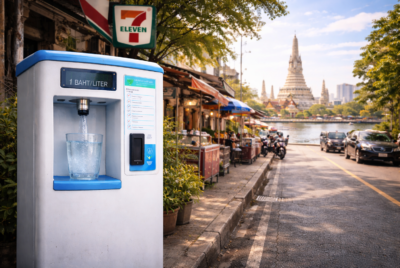
1. Water Dispensers Don’t Always Come With Filters
You see a water dispenser and think, “Great, filtered clean water” but all dispensers are not a guarantee that the water is filtered.
A lot of dispensers are connected straight to tap water. Some of them just add bubbles for sparkling water, some have filters that haven’t been changed in a while, and some don’t filter the water at all. So yes, two dispensers can look exactly the same and still give you completely different water.
Water myth #1 Don’t assume it’s filtered just because it comes from a dispenser.
2. Having a Water Filter Doesn’t Automatically Mean Your Water Is Clean
This is one of the most common misunderstandings. It sounds logical at first, but just because there’s a filter, it doesn’t automatically mean the water is fully treated.
Different contaminants need different solutions. Some filters that make the water taste better but don’t necessarily remove heavy metals or bacteria. That’s why water quality can still change, even when a filter is involved.
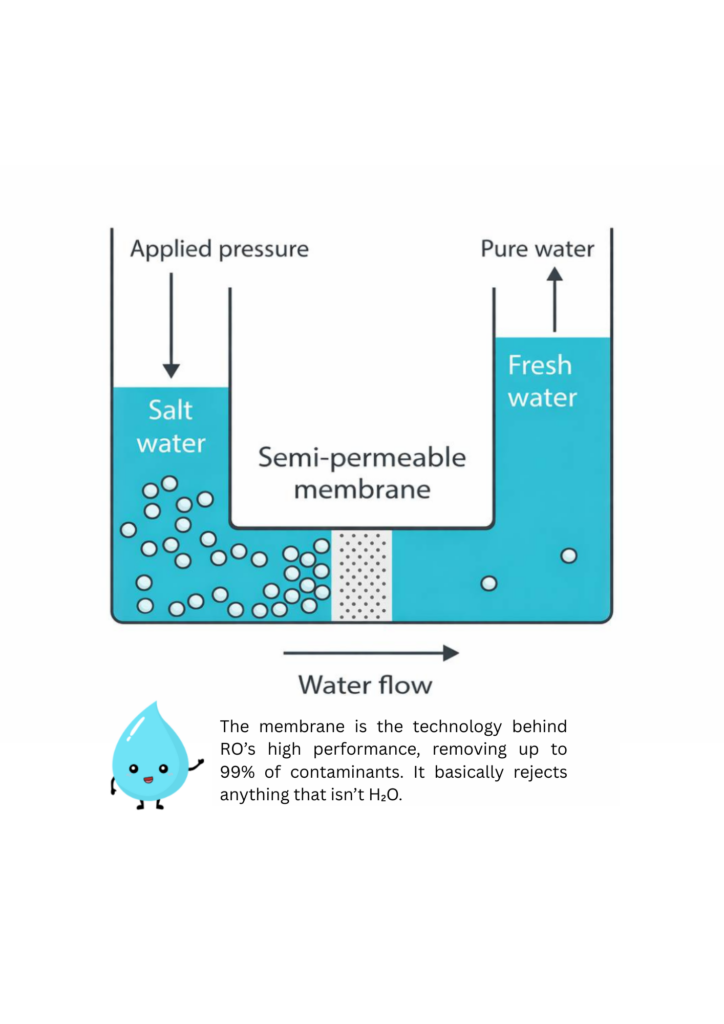
If you’re looking for water that tastes the same every single time no matter where you are or what the source is, consistency is the key. And that’s where reverse osmosis ( RO ) comes in.
RO systems remove a wide range of dissolved substances, bacteria, or literally anything that can be found in the water. Good RO units remove up to 99% of all contaminants which is why the water quality and taste stay standardized.
Check out the full video on Youtube where you can personally meet my dad & I.
How Reverse Osmosis membranes work
3. RO Water Is Good for You
A lot of the fear around reverse osmosis water comes from one specific idea that RO removes minerals. That immediately makes you think, “It must be unhealthy, right?”
Let’s simplify it. Yes, RO does remove minerals but that doesn’t make the water unhealthy. For most people, RO water is completely safe for daily consumption and is widely used in homes, businesses, and laboratories.
The main purpose of drinking water is safety as you can get all the necessary minerals from your food.
4. You Don’t Need to Get All Your Minerals From Water
You may think that drinking water needs to supply all of your daily minerals, especially if you’ve heard that water without minerals isn’t “complete.” In fact, that’s not how nutrition works.
Most of the essential minerals your body needs come from what you eat through food, supplements, and a balanced diet. Water simply plays a supporting role here rather than being the main source.
Tip: If mineral intake is something you’re thinking about, your food diet usually plays a much bigger role than the water you drink.
5. Cloudy Ice Usually Means Something Is Off
Ice can actually tell you more about your water than you might expect.When it freezes clear, it often means that they used water from a reverse osmosis system.
That cloudy appearance comes from dissolved solids (TDS) getting trapped as the water freezes, which is why ice made from purer water tends to look clearer and more transparent.
Tip: One of the easiest ways to get clear ice is by using an RO system and making sure filters and cartridges are replaced on time.
6. If Water Looks Clean, It Doesn’t Mean It Is Clean
Clear water can be reassuring, and you may naturally associate clarity with safety, but many impurities don’t affect how water looks at all. Water can appear perfectly clean while still containing dissolved solids, minerals, or other substances that simply aren’t visible to the eye.
That’s why appearance alone isn’t a reliable indicator of water quality.
Tip:Rather than judging water by how clear it looks, it’s always better to focus on how it’s treated and maintained.
7. Boiling Water Doesn’t Make It Fully Safe
You may trust boiling water because heat kills germs and bacteria, and that part is absolutely true. However, boiling only addresses biological risks and doesn’t remove things like heavy metals, chlorine, or dissolved solids that may still be present in the water.
Tip: Boiling is helpful as a short-term safety measure, but it shouldn’t be relied on as a complete water treatment solution.
8. Sparkling Water Isn’t Better Than Still Water
Sparkling water is simply still water with added carbon dioxide. That’s it. Fizzy, bubbly, the Beyoncé of beverages.
It doesn’t hydrate you more, and it doesn’t come with extra health benefits. From a hydration point of view, it works exactly the same as still water, the difference is really about how much you enjoy it.
Tip:If sparkling water makes drinking water more fun for you, go for it. Just don’t expect it to hydrate you better or come with magical properties.
9. Water Has Memory
You may have heard claims that water has memory, that it can somehow store emotions, intentions, or information. It’s an idea that comes up from time to time and sounds intriguing, especially when it’s framed in an emotional way. Some scientists also have tried a research proving this theory but there are many others that disapprove it.
That said, I personally stick to science and to facts that can be tested, measured, and reproduced. When it comes to drinking water, I focus on things we can actually verify, like treatment methods, filtration, and overall safety. So while the idea of water having memory is interesting to some, it’s not something I rely on when making decisions about water quality or talk sweet to my water before drinking it.
Tip:When it comes to your drinking water, it’s always safer to base choices on proven science rather than on theories that can’t be tested.
Final Thoughts
What this experience really reinforced for me is that drinking water isn’t just about taste or convenience, it’s about understanding how your water is treated and what it may still contain.
Clear water isn’t always clean. Filters aren’t all the same. And many common “safety habits” only solve part of the problem. The goal isn’t to overthink every sip, but to make informed choices based on facts rather than assumptions so you can live a healthier life.
When it comes to water, consistency, maintenance, and proven treatment methods matter far more than appearances or trends.
Here is the full video
Summary
- A water dispenser doesn’t automatically mean filtered water
- Not all filters remove the same contaminants
- Reverse osmosis provides consistency and broad purification
- Minerals mostly come from food, not water
- Cloudy ice is often a warning sign
- Clear-looking water can still contain impurities
- Boiling helps with bacteria, not dissolved substances
- Sparkling water hydrates the same as still water
Do’s and Don’ts
Do:Ask how your water is filtered, not just if it’s filtered
Don’t: Rely on appearance alone to judge water safety
Do: Pay attention to taste changes like metallic, salty, or bitter flavors matter
Don’t: Assume dispensers automatically mean clean or filtered water
Do: seek RO systems if you want consistent water quality
Don’t: Think boiling solves all water quality issues
Frequently Asked Questions (FAQ)
Is reverse osmosis (RO) water safe for daily drinking?
Yes, absolutely. RO water is arguably the safest water out there. Reverse osmosis filtration removes up to 99% of contaminants from drinking water, including heavy metals, chemicals, and microorganisms.
It does remove minerals too, but that’s not a problem. You get the minerals your body needs from food, not water. If you like the taste of mineralised water, you can always add a simple remineralisation filter.
Does boiling water make it completely safe to drink?
Not completely. Boiling water kills bacteria and germs, but it doesn’t remove chemical contaminants like heavy metals, chlorine, or dissolved solids. In some cases, boiling can even concentrate what’s left behind.
Think of boiling as a way to kill only bacteria ep, not a full water treatment solution.
Why does my ice look cloudy at home?
Cloudy ice usually means dissolved minerals or air bubbles are getting trapped as the water freezes. It’s not dangerous, but it can be a sign that your water isn’t fully treated or that your filters need changing.
Using filtered or RO water often results in clearer ice.
Is sparkling water more hydrating than still water?
No, sparkling water and still water hydrate you the same way. Sparkling water is just still water with added carbon dioxide.
If you enjoy bubbles, drink sparkling water. Just don’t expect extra hydration benefits or negative side effects simply because it contains carbon dioxide.
Can drinking water give you all the minerals you need?
No – Even highly mineralized water contains relatively small amounts compared to what your body requires to be healthy. A balanced diet provides far more essential minerals than water ever could.
Water can supports hydration, your diet does the heavy lifting.
How can you actually tell if your drinking water is good quality?
You usually can’t tell just by looking at it and unfortunately there isn’t an easy answer to this.Just know this – clear water doesn’t always mean clean water. Many contaminants like dissolved solids or heavy metals have no taste, smell, or color.The most reliable way to know your water quality is to test it or understand how it’s treated, and of course check filter maintenance When in doubt, consistent treatment methods like reverse osmosis provide the most predictable results.If you’re just getting started and want to understand the basics, I’ve also written a beginner’s guide to water filters on my blog that breaks everything down in a simple, practical way.